Wildlife in Laos and SE Asia - An Introduction
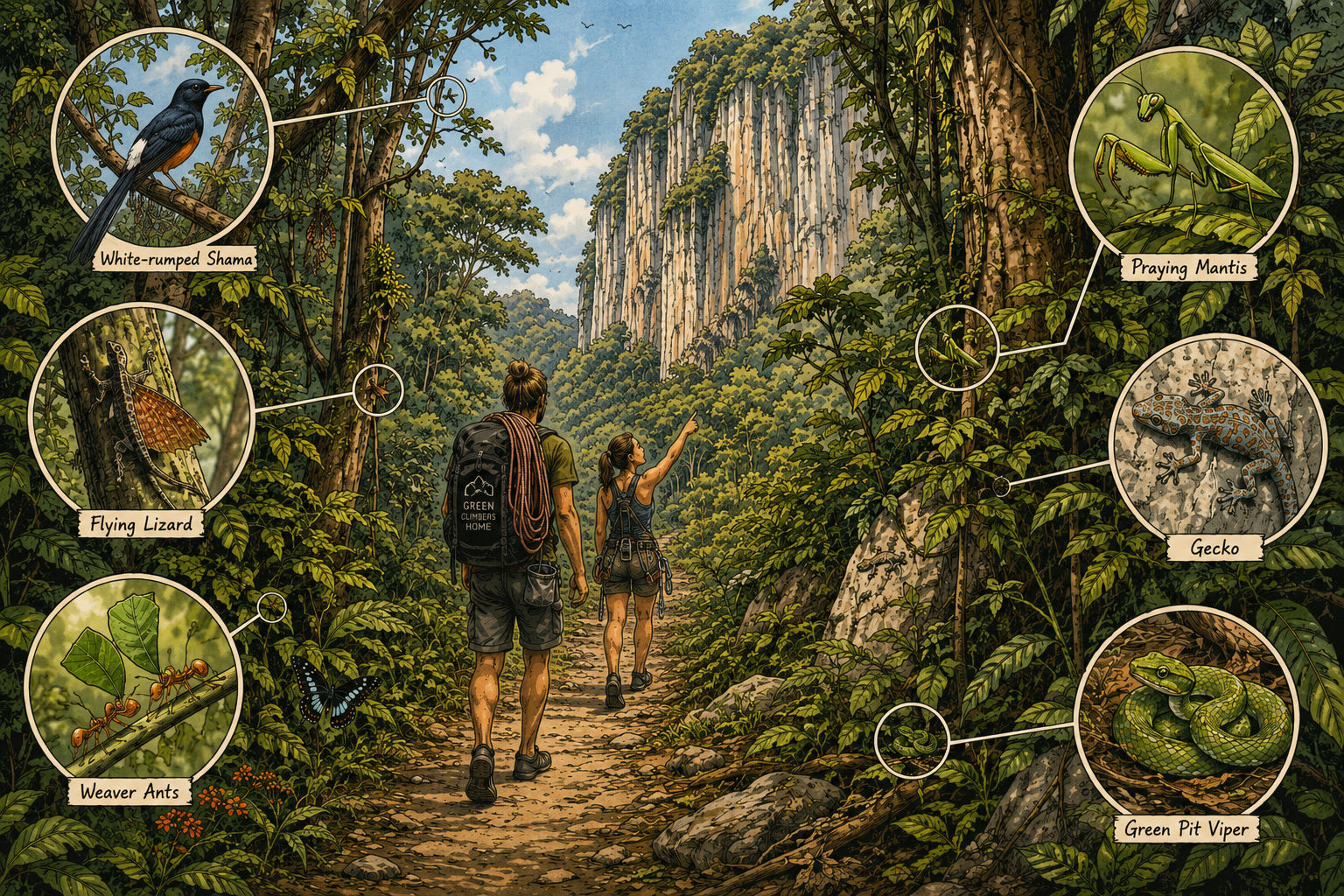
For many visitors, the adventure begins with the limestone cliffs. But every walk to the crag and every rest day also offers the chance to discover another side of Central Laos - its remarkable wildlife. Spotting a flying lizard gliding between the trees on your way to the crag can be just as memorable as sending your project.
Some of the most fascinating creatures are hiding in plain sight and don't require long hikes or hours of searching - only a keen eye for detail. It's easy to walk past a colony of weaver ants without a second glance, even though these tiny insects are among the most accomplished engineers in the animal kingdom. Working together, they build intricate nests by stitching living leaves together with silk produced by their larvae. Once you start paying attention, you begin to realise that the forest is full of extraordinary stories waiting to be discovered.
Living and working beside these forests has given us the opportunity to observe wildlife throughout the seasons and to learn from local communities and conservation partners. In the articles below, we share some of the species that make this corner of Laos so special—from charismatic mammals and colourful birds to reptiles, insects, and the countless small creatures that most travellers never notice. We hope these insights will help you experience the forests with fresh eyes and make your trip to Central Laos even more memorable.
Rather than creating a comprehensive guide to every animal found in Laos, we've chosen a more practical approach. Our articles focus on the species you're most likely to encounter in and around Green Climbers Home and the surrounding climbing areas. If you spot a snake, a lizard, or an unusual insect during your stay, you shouldn't have to sift through hundreds of species to figure out what you saw.
We'll also feature species that you're unlikely to see around the camp but may encounter while exploring the Thakhek Loop or on climbing trips through Vietnam and Thailand. Together, these articles provide a wildlife guide tailored to the places our guests actually visit.
Each article introduces a single species with information on how to recognize it, where you might encounter it, and what makes it unique. Along the way, we share fascinating facts, personal observations from living beside the forest, and stories from our guests and local partners. If your curiosity goes even further, you'll also find links to reliable sources where you can dive deeper into the science and conservation of each species.
Snakes
Southeast Asia is home to an incredible diversity of snakes. Vietnam has more than 250 recorded species, Thailand over 220, and Laos more than 120. Despite these impressive numbers, only a relatively small proportion are considered medically significant to humans. Most snakes are shy, avoid confrontation, and play an important role in keeping ecosystems healthy.
To make identification easier, we've organised our snake articles into two practical groups: species that are not dangerous to humans and species of medical significance. While some snakes are technically venomous, their venom poses little or no risk to people. This distinction is more useful for travellers than simply dividing snakes into venomous and non-venomous species.
The species featured below are those you are most likely to encounter in and around Green Climbers Home and the surrounding climbing areas. Whether you spot a snake crossing the trail, resting on a limestone wall, or hiding in the vegetation, these articles will help you identify it, understand its behaviour, and know whether it poses any risk.
A note on safety: This guide is intended to help you identify and appreciate the snakes you may encounter—not to encourage handling them. Correct identification can be difficult, even for experienced naturalists, and many harmless species closely resemble medically significant ones. The safest approach is always to admire snakes from a respectful distance and allow them to continue on their way.
Want to Learn More?
If you're fascinated by snakes and happen to be passing through Bangkok, we highly recommend visiting the Queen Saovabha Memorial Institute Snake Farm. Operated by the Thai Red Cross Society, it is the second-oldest snake farm in the world and combines research, antivenom production, education, and conservation. The institute features an excellent museum that introduces the snakes of Thailand and explains venom, snakebite treatment, and the important role snakes play in the ecosystem. In the morning, visitors can watch a live venom extraction demonstration, while the afternoon features an educational snake presentation by experienced handlers.
It's one of the best places in Southeast Asia to replace myths and misconceptions with a better understanding of these remarkable animals.
Species of Medical Significance
Article about the Monocled Cobra
Article about the Banded Krait
Article about the Large Eyed Pitviper
Low Risk to Humans
Oriental Whip Snake / Vine Snake
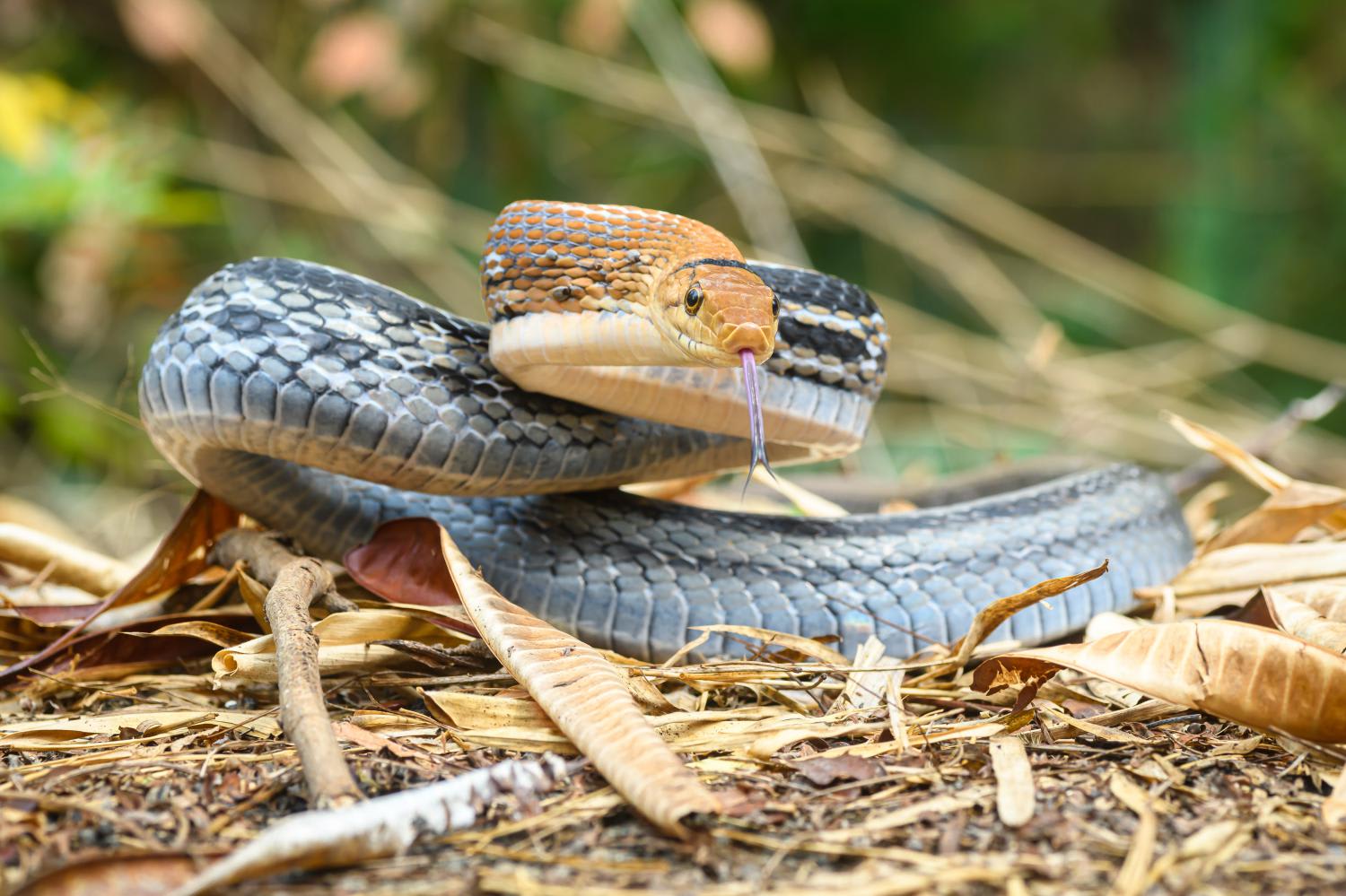
Article about the Copperhead Racer
Additional Information about snakes
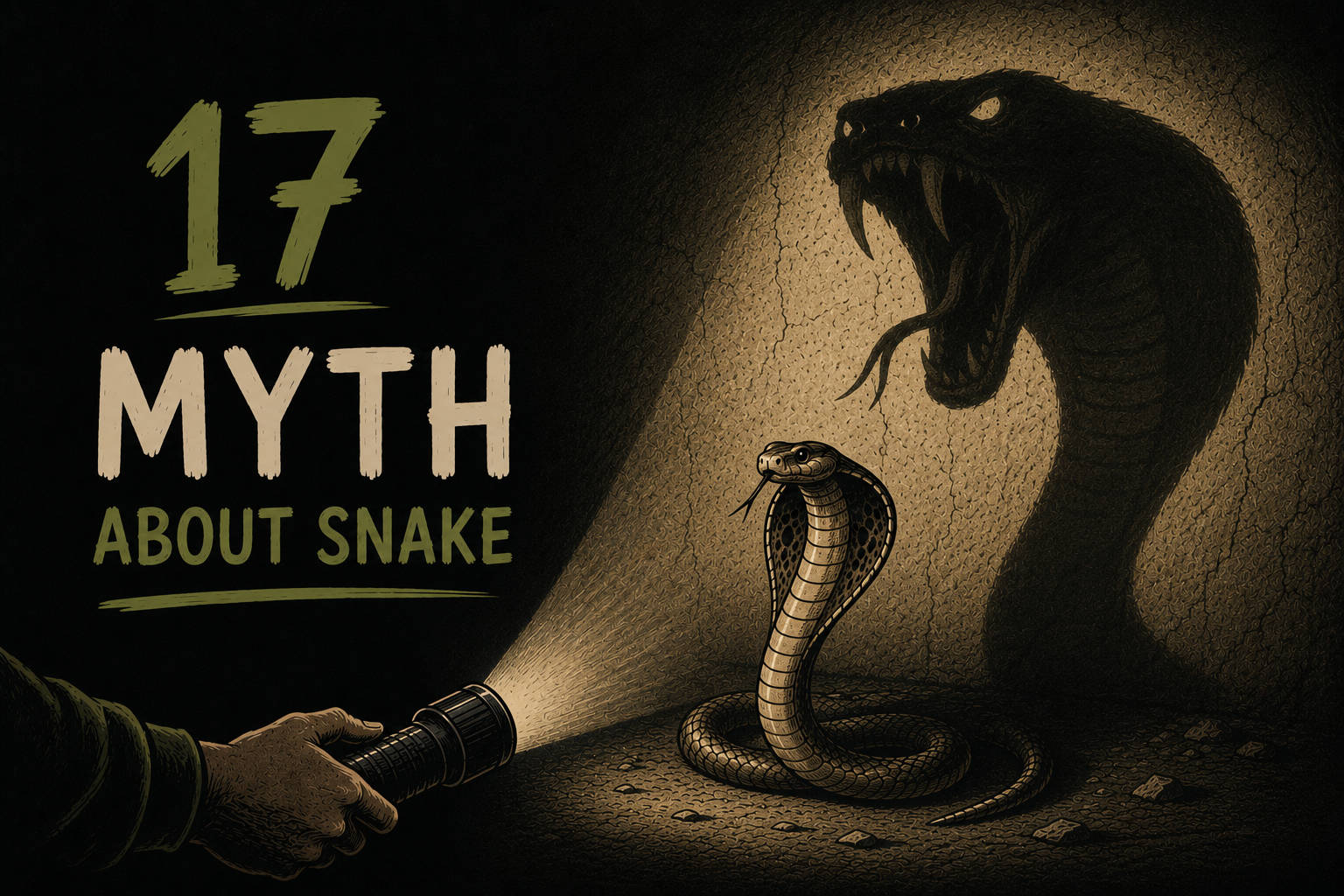
Common Snake Myth , Know the Facts
Mammals
Compared to birds, reptiles, or insects, mammals are among the most elusive animals you'll encounter around Green Climbers Home. Most are active at dawn, dusk, or during the night, while others have become wary of people after generations of hunting. Spotting one often requires a bit of luck, patience, and good timing.
One notable exception is the small flying squirrels, which are surprisingly common around the camp. Rather than spotting them from the ground, you're most likely to meet them while climbing. They often emerge from holes and cracks in the limestone cliffs before launching themselves into long, silent glides across the forest. Occasionally, one will even dash across a climber's arm or use a shoulder as a convenient launch pad before disappearing into the trees, a wildlife encounter few climbers ever expect.
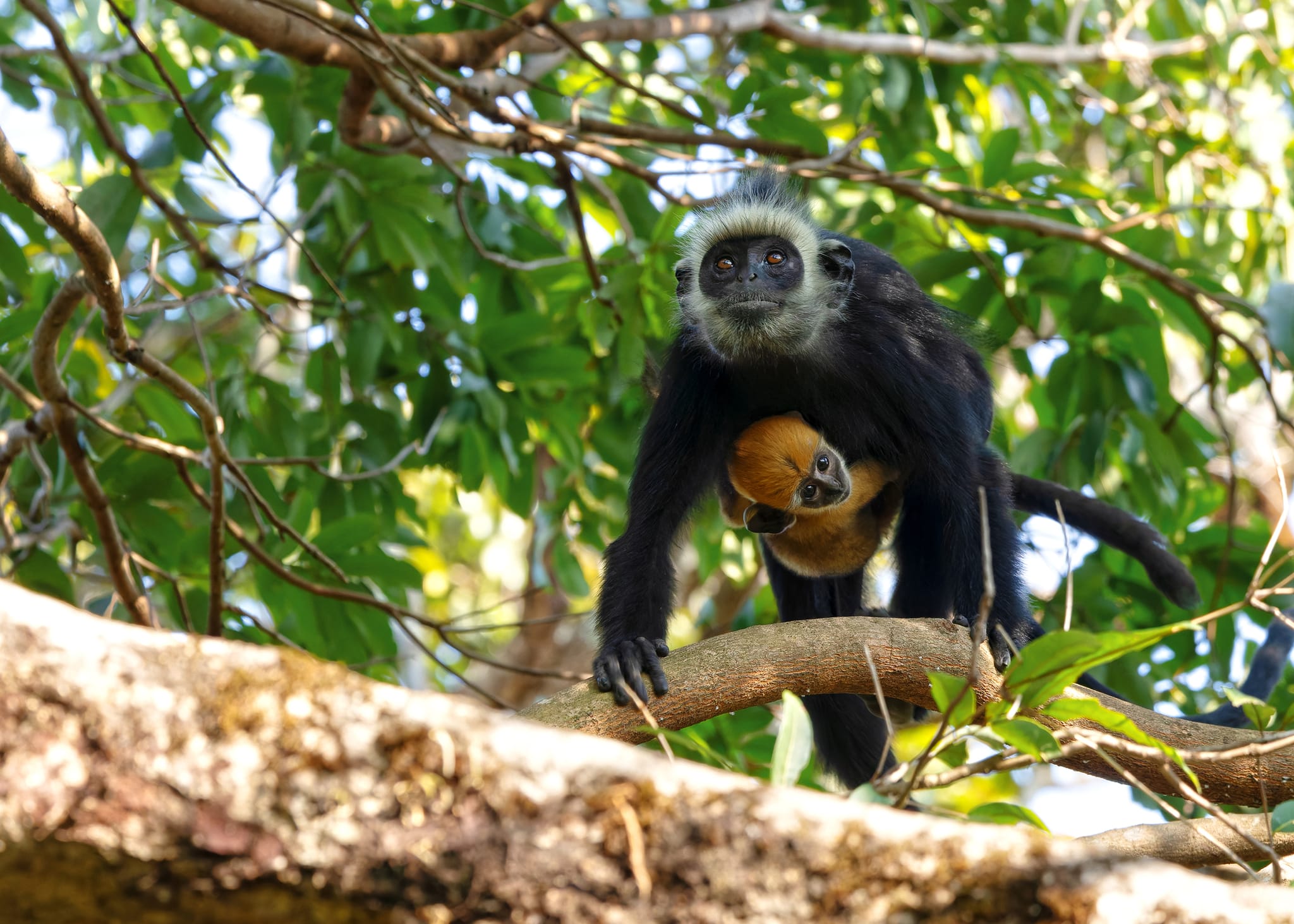
Article about the Laotian Langur
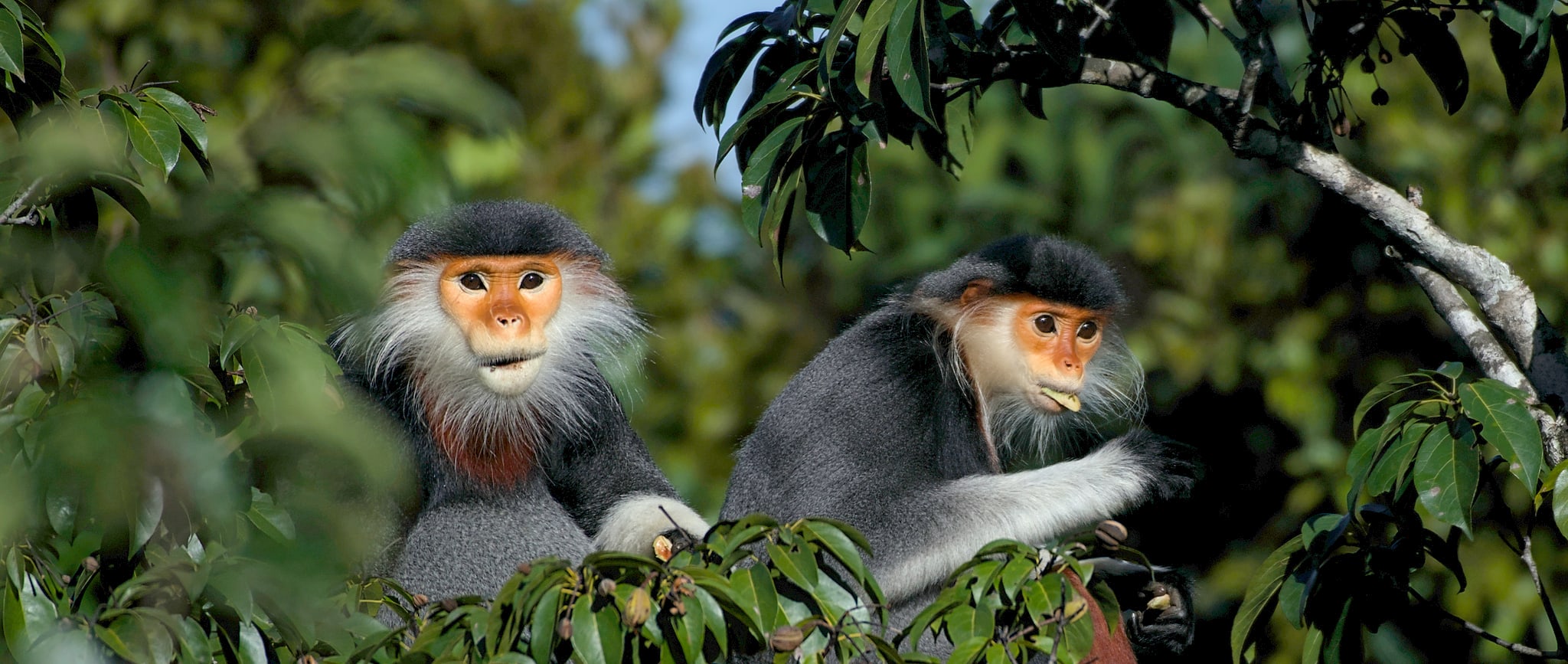
Article about the Red Shanked Douc
Lizards
Lizards are a familiar part of everyday life around Green Climbers Home, although you may hear them before you ever see them. As the sun sets, the loud, unmistakable call of the Tokay Gecko echoes through the forest and around the camp. Many first-time visitors mistake it for the call of an unusual bird before discovering the surprisingly large gecko responsible.
Some of the region's most remarkable lizards are much harder to find. Flying lizards are masters of camouflage, blending almost perfectly into tree bark. Even though they are present around the camp, many visitors walk straight past them without ever noticing. Fortunately, a few simple tricks can dramatically improve your chances of spotting one, and we'll share them in the articles below.
From vocal geckos to perfectly camouflaged gliders, the lizards of Central Laos are far more diverse than most travellers expect.