Banded Krait

Banded Krait (Bungarus fasciatus)
Introduction
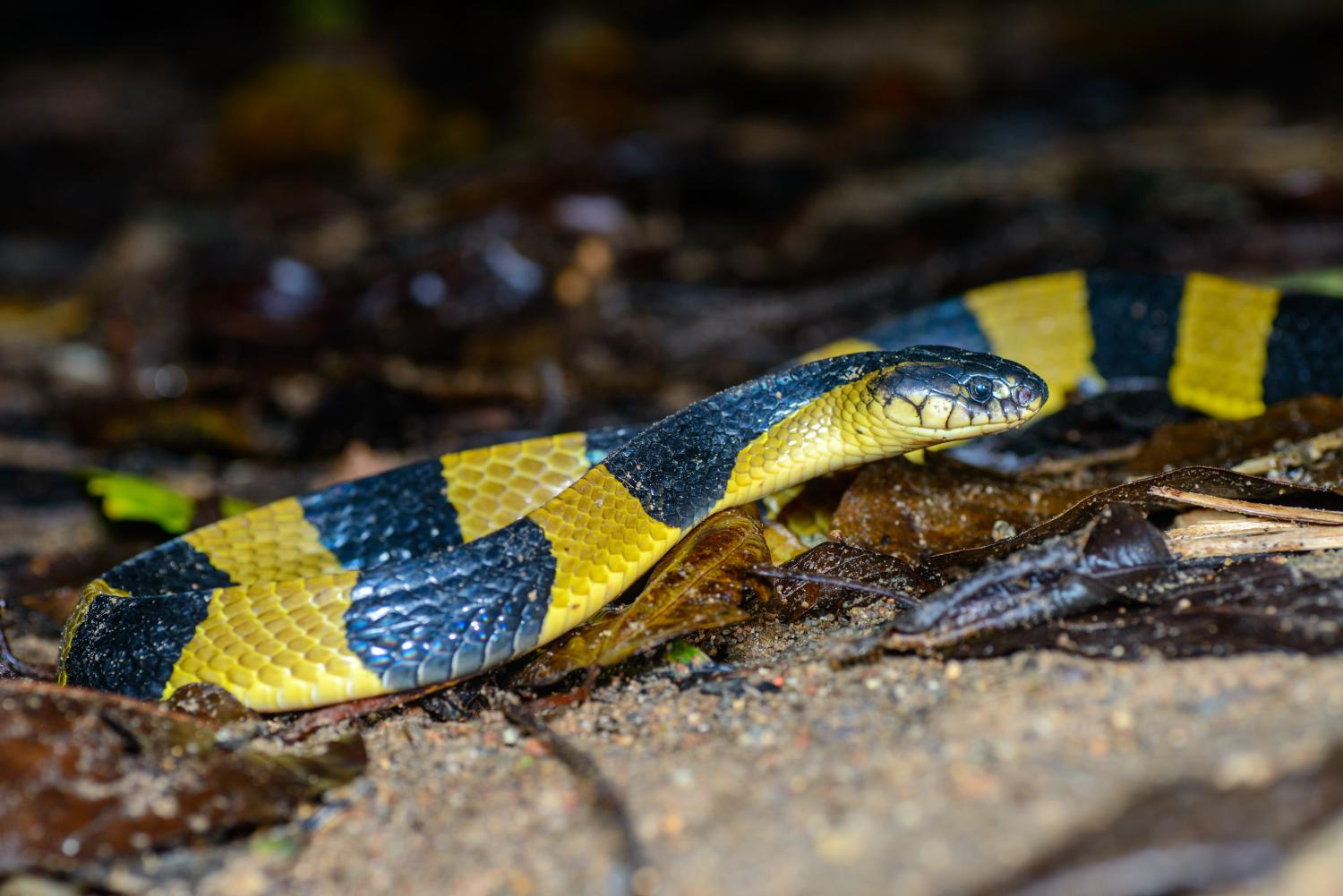
The Banded Krait (Bungarus fasciatus) is one of Southeast Asia's most recognizable snakes. Its striking black and yellow bands, large size, and triangular body shape make it easy to identify. Although highly venomous, it is generally considered a shy and docile species that prefers to avoid confrontation. It occurs throughout much of Southeast Asia, including Laos, where it can be found in forests, agricultural areas, and near water sources.
Quick Facts
- Scientific name: Bungarus fasciatus
- Common name: Banded Krait
- Family: Elapidae
- Length: Usually 1.5–1.8 m, up to 2.25 m
- Activity: Primarily nocturnal
- Habitat: Forests, agricultural land, grasslands, and areas near water
- Diet: Mainly other snakes, also frogs, fish, skinks, and eggs
- Reproduction: Egg-laying
- Venomous: Yes, highly venomous neurotoxic venom
Identification
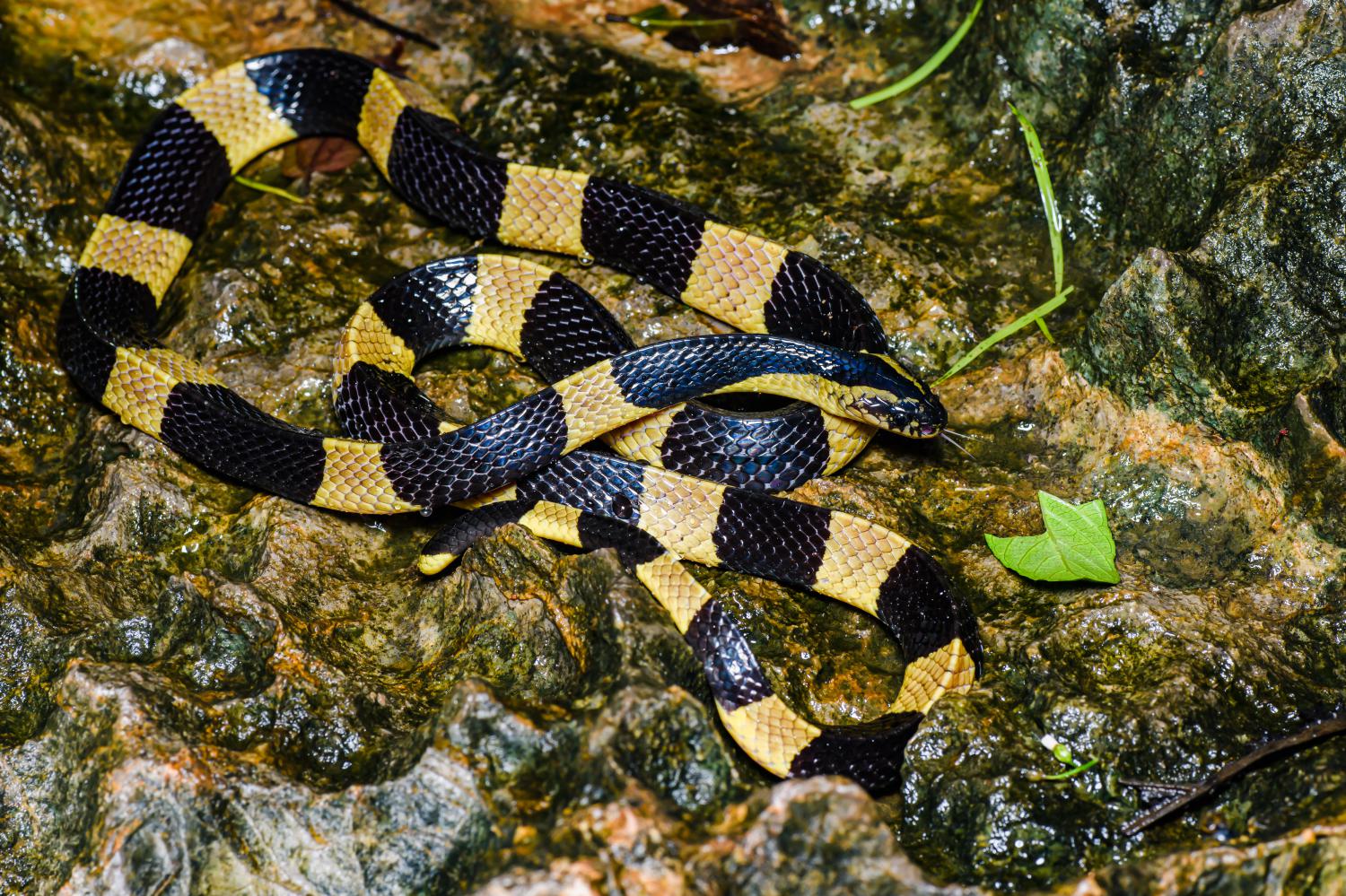
The Banded Krait is the largest member of the krait family and can exceed 2 meters in length, though most individuals are around 1.5 to 1.8 meters long. It has broad alternating black and yellow bands that completely encircle the body. The body is distinctly triangular in cross-section, with a prominent ridge running along the spine. The head is broad and only slightly distinct from the neck, with yellow markings on an otherwise black head.
Habitat and Behavior
This species inhabits a wide variety of environments, including forests, grasslands, agricultural areas, and village outskirts. It is often associated with water and may shelter in rodent burrows, termite mounds, drainage systems, or dense vegetation.
The Banded Krait is primarily nocturnal. During the day it usually remains hidden and is often sluggish, even when disturbed. When threatened, it commonly tucks its head beneath its coils instead of striking. At night it becomes much more active as it searches for prey.
Diet
Tthe Banded Krait specializes in hunting other snakes. It will also feed on frogs, fish, skinks, and snake eggs. Its venom quickly immobilizes prey before it is swallowed head-first.
Reproduction
Little is known about the breeding habits of this species. Females lay eggs rather than giving birth to live young. Clutches of around eight eggs have been recorded, and hatchlings measure approximately 30 cm in length. Young snakes are believed to reach maturity after about three years.
Venom
The Banded Krait possesses a powerful neurotoxic venom that affects the nervous system. Symptoms of serious envenomation can include dizziness, vomiting, abdominal pain, paralysis, and respiratory failure. While bites are uncommon because the species is generally reluctant to bite, all bites should be treated as medical emergencies requiring immediate hospital care. Antivenom is available in several countries within its range.
Encountering One at the Camp
The Banded Krait may occasionally be encountered around limestone valleys, forest edges, and areas near water. Most sightings occur at night when the snake is actively hunting. Its bold black-and-yellow pattern serves as a warning signal, making it one of the easiest venomous snakes in Laos to identify.
If you encounter a Banded Krait, give it plenty of space and never attempt to handle it. Like most snakes, it plays an important role in the ecosystem by controlling populations of rodents and other reptiles.
Source:
Copyright:
Images published under CC License CO-BY-SA
https://www.thainationalparks.com/species/bungarus-fasciatus
https://creativecommons.org/licenses/by/2.0/