Copperhead Racer
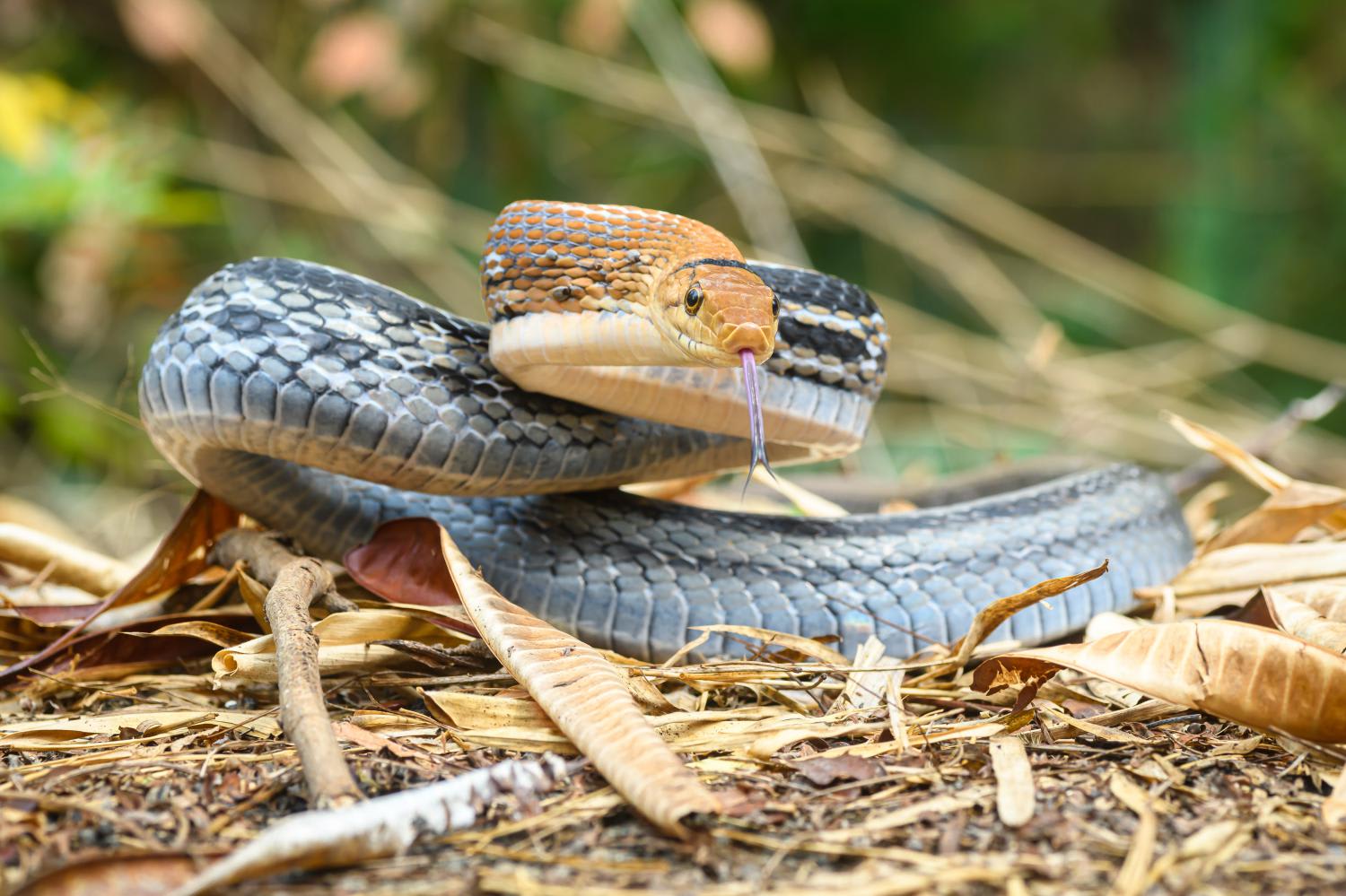
At first glance, the Copperhead Racer looks like a snake you would rather avoid. Its copper-colored head, impressive size, and lightning-fast movements often lead people to assume it is venomous. The name doesn't help either, as many travelers associate it with the highly venomous American Copperhead. In reality, the Copperhead Racer (Coelognathus radiatus) is a harmless, non-venomous species and one of the most beneficial snakes found throughout Southeast Asia.
Active during the day and frequently encountered around villages, farmland, and forest edges, it plays an important role in keeping rodent populations under control. Around Green Climbers Home, it is one of the snake species visitors are most likely to encounter.
Identification
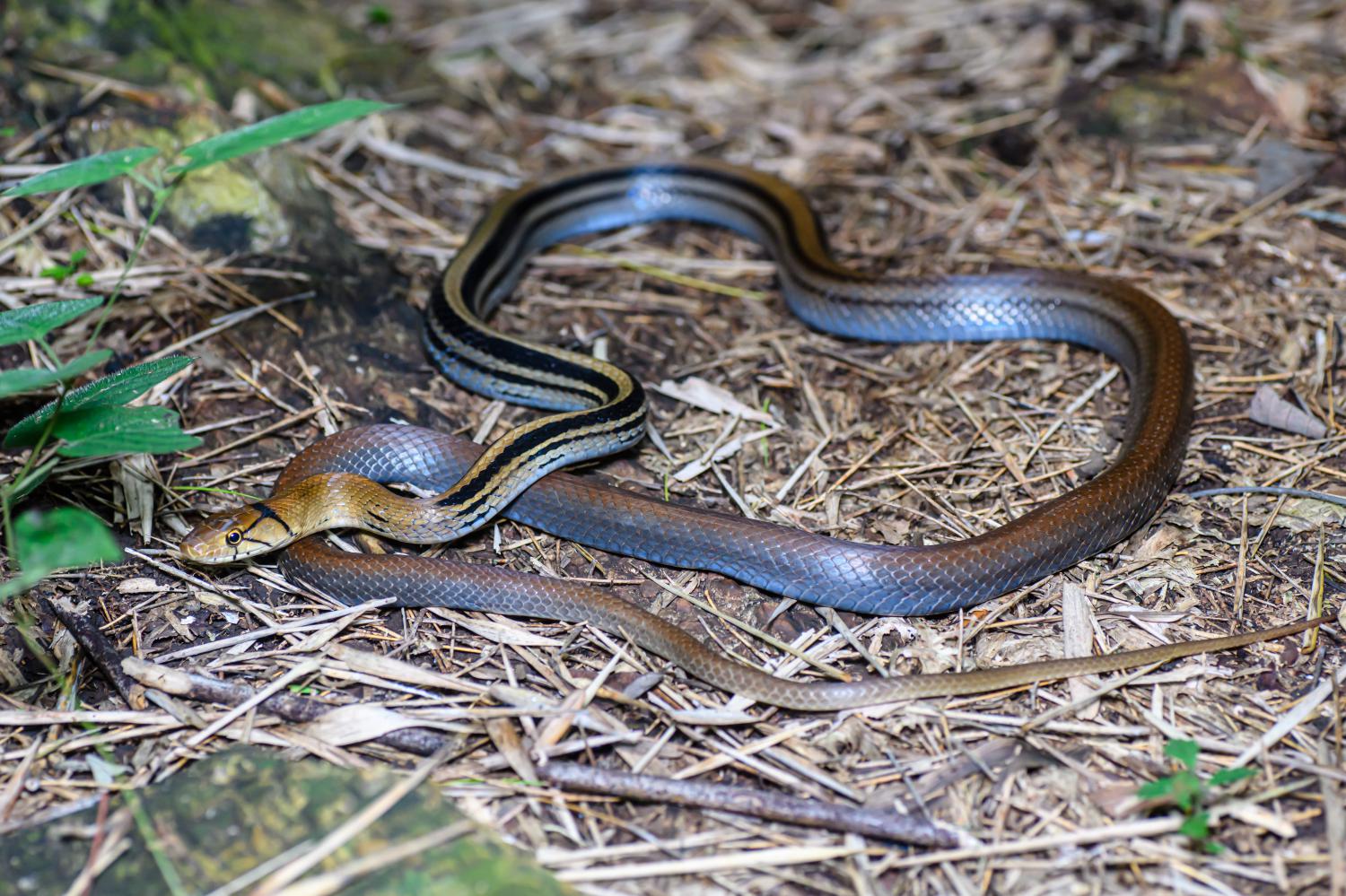
The Copperhead Racer is a slender, athletic snake built for speed rather than strength. Adults typically reach 1.2 to 1.8 meters in length, although particularly large individuals can exceed two meters.
Its most distinctive features include:
- A copper or bronze-colored head.
- Large eyes with round pupils.
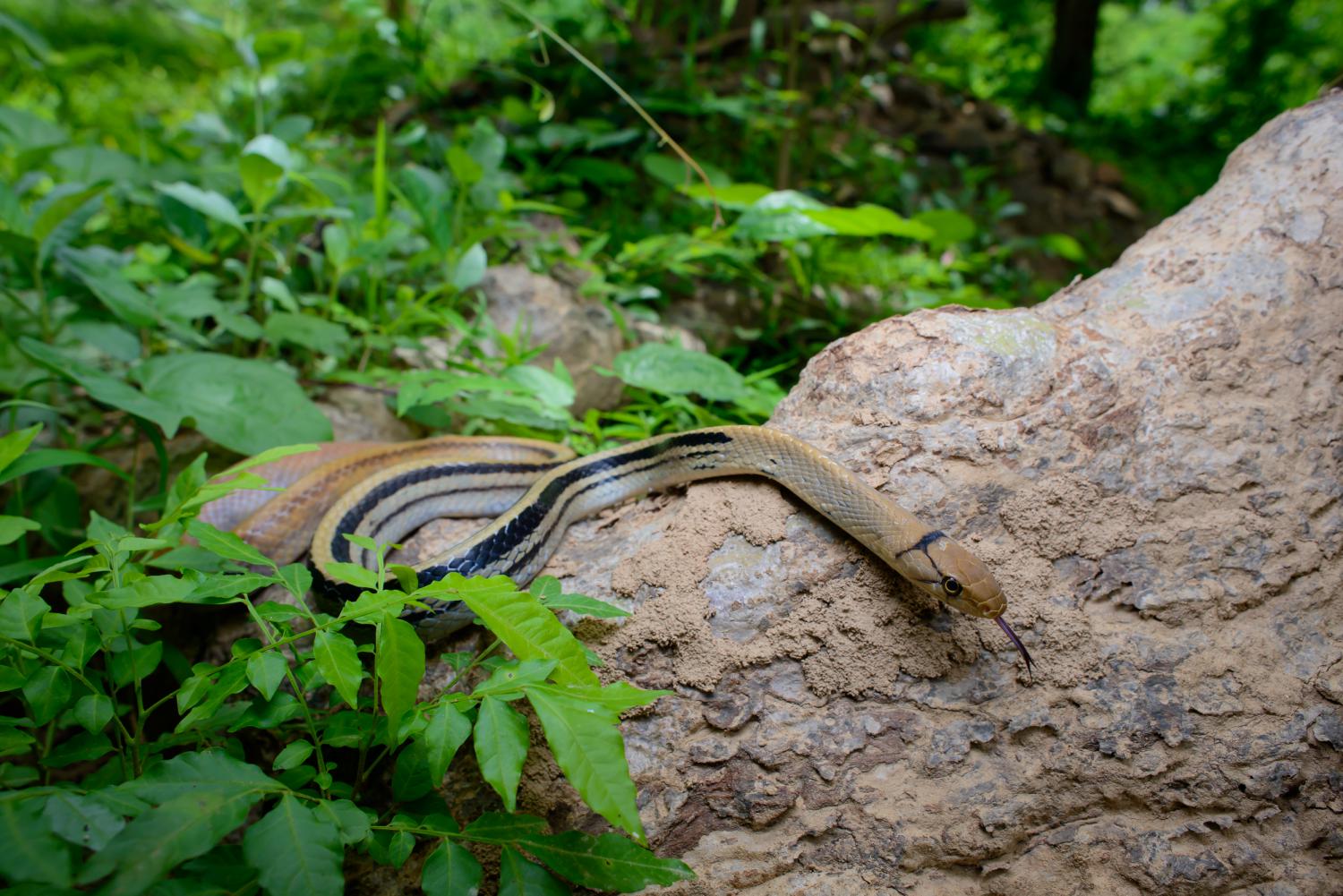
- Two bold black stripes running from the eyes along each side of the neck.
- A pale yellow, tan, or light brown body with darker crossbars that become less distinct toward the tail.
- A long, slender body with a relatively long tail.
Juveniles display much stronger body markings than adults, making them easier to distinguish. As they mature, these markings gradually fade.
Habitat
The Copperhead Racer is highly adaptable and can be found in a wide variety of habitats. It occurs in primary and secondary forests, bamboo groves, forest edges, plantations, rice fields, agricultural land, and even gardens around villages.
Unlike many forest specialists, this species tolerates human activity well. It is commonly seen crossing roads, hunting near farms, or moving through vegetation around buildings in search of prey.
Behavior
The Copperhead Racer is diurnal, meaning it is primarily active during the day. It is an alert and curious snake that relies on excellent eyesight to locate prey and detect danger.
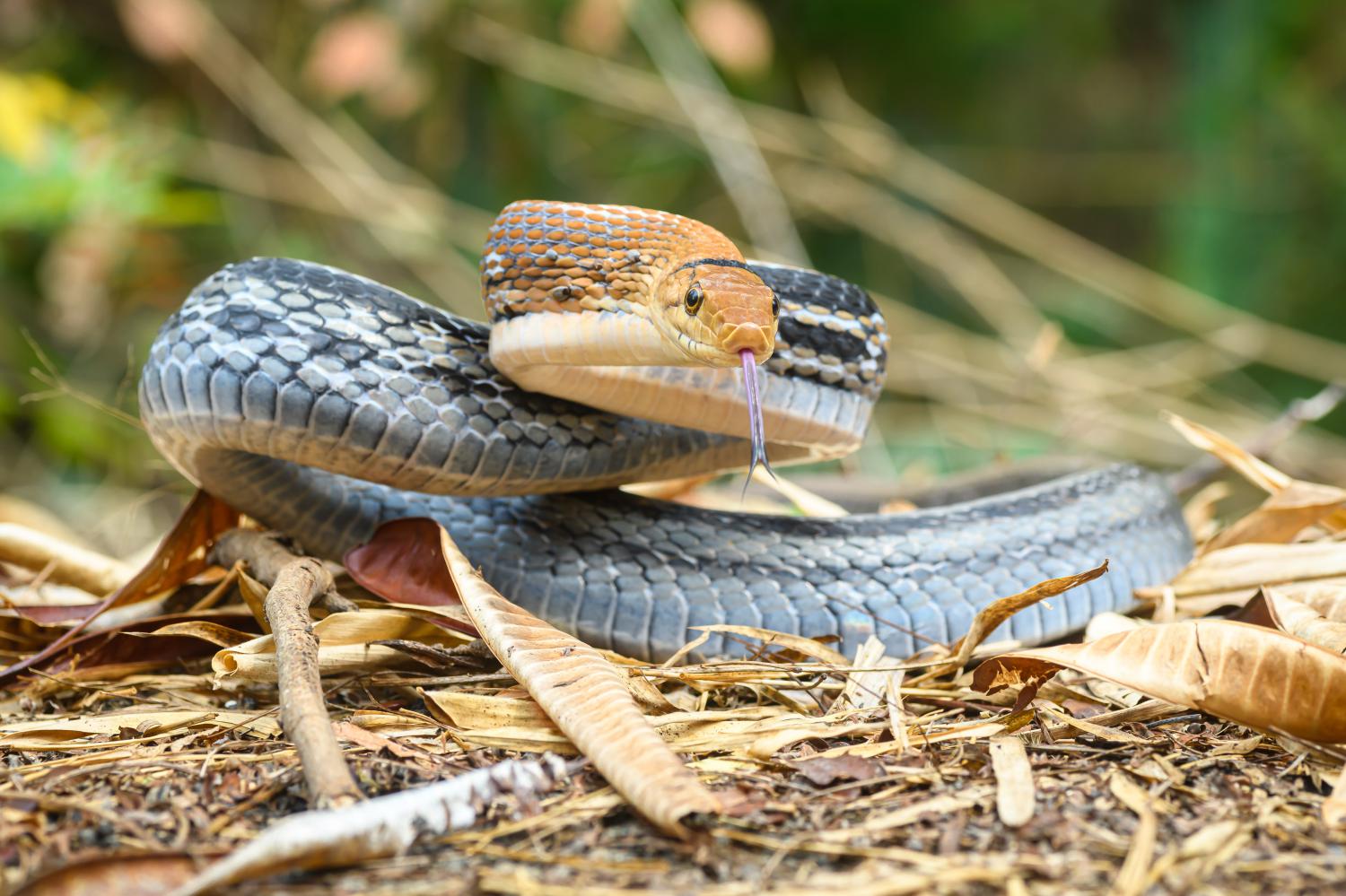
As its name suggests, speed is its greatest defense. When disturbed, it almost always chooses to flee rather than confront a potential threat. Many encounters last only a few seconds before the snake disappears into nearby vegetation. If escape is not possible, however, it can become highly defensive. It may flatten its neck slightly, vibrate its tail, hiss, and strike repeatedly. Although this display can be intimidating, the bites are harmless aside from minor puncture wounds.
Under extreme stress, the Copperhead Racer has one more remarkable defense. It can exhibit thanatosis, also known as death-feigning. The snake rolls onto its back, exposes its pale underside (venter), and relaxes most of its muscles, appearing dead. This unusual behavior may convince predators that it is no longer worth attacking, giving the snake a chance to escape once the danger has passed.
Diet
The Copperhead Racer is an active hunter that searches for prey rather than waiting in ambush.
Its diet includes:
- Rats and mice
- Lizards
- Frogs
- Small birds
- Bird eggs
- Occasionally other snakes
Because it frequently hunts rodents around farms and villages, it provides a valuable natural pest control service. A healthy population of Copperhead Racers helps reduce the number of crop-damaging rodents without the need for poisons.
Around Green Climbers Home
The Copperhead Racer is one of the more frequently observed snakes around Green Climbers Home. It is most often seen during daylight hours crossing trails, moving through bamboo, or hunting around areas where rodents are abundant.
Despite its size, many encounters are surprisingly brief. The snake usually notices people first and disappears long before anyone gets close enough for a photograph. Its curious nature occasionally causes it to pause and observe approaching hikers before quickly retreating into the undergrowth.
Is the Copperhead Racer Venomous?
No. The Copperhead Racer is non-venomous and poses no serious danger to humans.
Its defensive posture often causes unnecessary alarm. When threatened, it raises the front of its body and slightly flattens its neck, giving it a superficial resemblance to a cobra. This bluff is usually enough to make predators hesitate, but unlike a true cobra, it cannot spread a broad hood or deliver venom.
The best response is simply to give the snake space. Once it has an escape route, it will almost always choose to flee.
Similar Species
The Copperhead Racer is sometimes mistaken for several other snakes found in Southeast Asia, including rat snakes (Ptyas species), juvenile King Cobras, and Monocled Cobras.
The easiest way to distinguish it from a cobra is its narrow neck. While a cobra can spread a wide hood, the Copperhead Racer only flattens its neck slightly. It also has noticeably larger eyes with round pupils and a much more slender build.
Conservation Status
The Copperhead Racer is currently classified as Least Concern due to its wide range and ability to thrive in a variety of habitats.
Although the species remains common, many individuals are killed on roads or by people who mistakenly believe they are dangerous. Learning to recognize this harmless snake helps reduce unnecessary killing and supports healthy local ecosystems.
Interesting Facts
- Despite its name, it is not related to the American Copperhead.
- It is one of the fastest snakes in Southeast Asia.
- When threatened, it often imitates the defensive posture of a cobra.
- It is an excellent climber but spends most of its time on the ground.
- Under extreme stress, it may play dead by exhibiting thanatosis.
- It is one of nature's most effective rodent controllers around farms and villages.
 Sources and Copyright
https://creativecommons.org/licenses/by-sa/2.0/deed.en
https://www.flickr.com/photos/rushen/47571140171/
https://www.thainationalparks.com/species/coelognathus-radiatus