Monocled Cobra
Monocled Cobra (Naja kaouthia)
Personal encounter
In the last nine years, I have only encountered a monocled cobra once, so despite being widespread in Laos, your chances of seeing one are quite low.
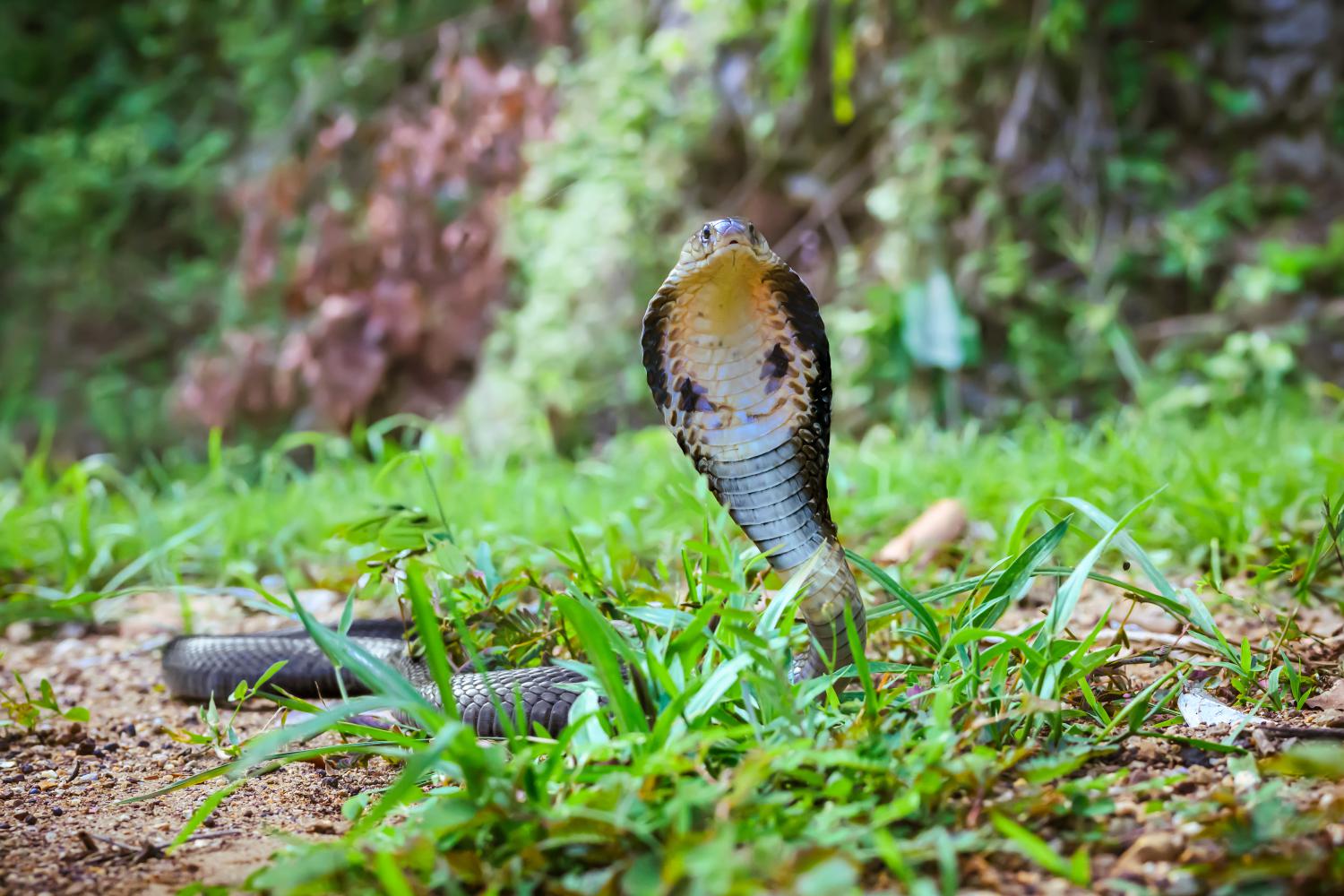
My only sighting happened at Camp 2. I was sitting on the restaurant steps when Gaston, our young camp cat, came charging towards us while chasing a monocled cobra. As the snake suddenly found itself heading towards a group of people, it briefly raised the front of its body and spread its hood. The display lasted only a moment before it slipped under a pile of backpacks beside the restaurant. When we carefully moved the backpacks, the cobra immediately took the opportunity to escape into the surrounding vegetation.
What struck me most was how determined the snake was to avoid conflict. Even with an energetic young cat bothering it, the cobra showed no interest in standing its ground. The hood display was simply a warning, not an attack. As soon as it saw a chance to get away, it took it. This is typical behaviour for most snakes, including highly venomous species. While the monocled cobra deserves respect, it is not an aggressive animal looking for trouble and would much rather avoid humans whenever possible.
Quick Facts
Common name: Monocled Cobra
Scientific name: Naja kaouthia
Thai name: Ngu Hao Thai (งูเห่าไทย)
Family: Elapidae (cobras, kraits, coral snakes)
Conservation status: Least Concern (IUCN)
Maximum length: Up to 2.3 m, usually 1.3–1.5 m
Activity: Mostly active at dusk and during the night
Habitat: Paddy fields, forests, shrubland, wetlands, farmland, and villages
Diet: Frogs, fish, rodents, lizards, and other snakes
Distribution: Widespread throughout South and Southeast Asia, including Laos
Appearance
The monocled cobra is named after the distinctive circular marking on the back of its hood. Unlike the Indian cobra, which has a spectacle-shaped pattern, the monocled cobra usually displays a single O-shaped mark.
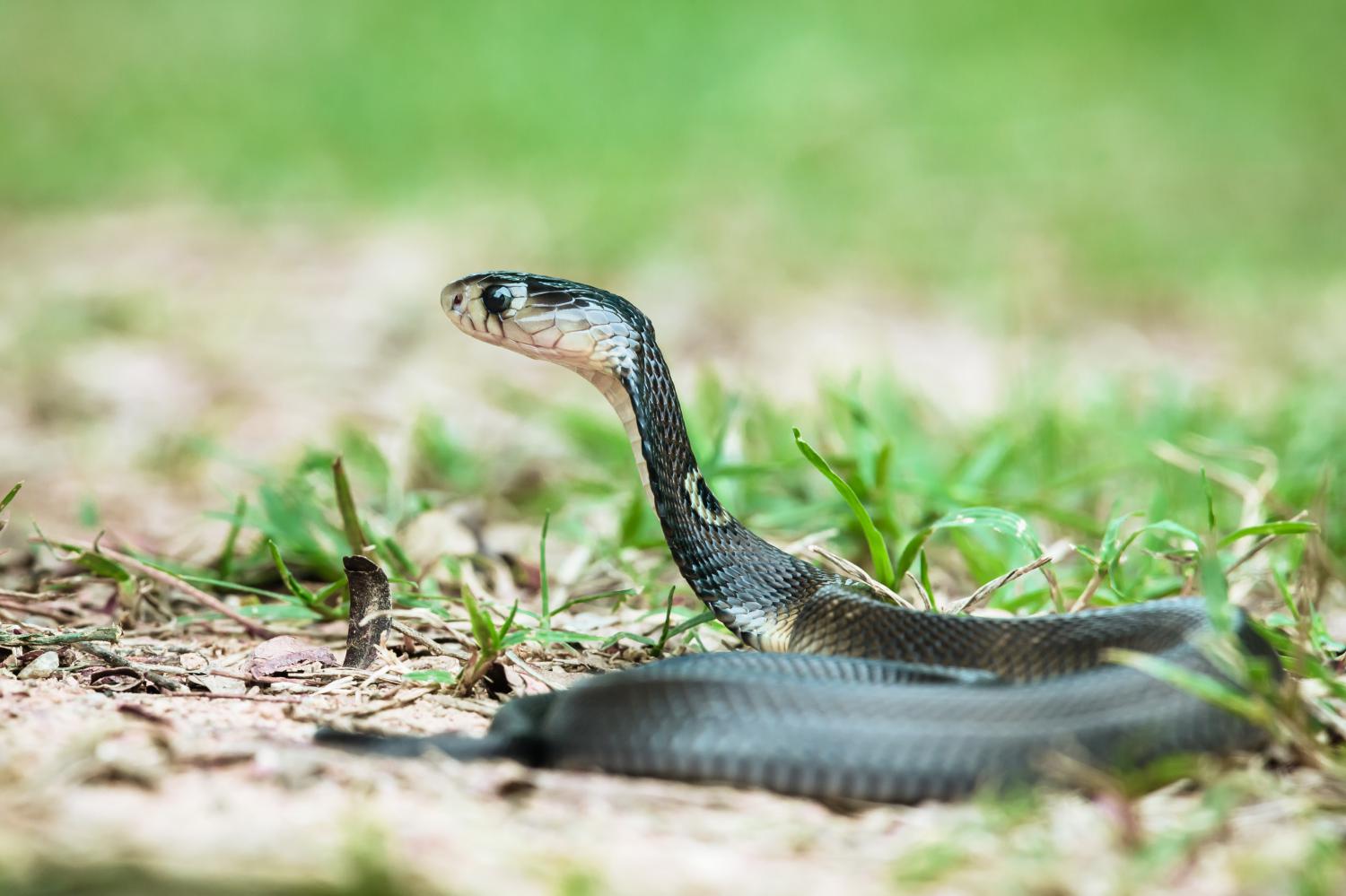
Color varies considerably between individuals. Snakes may be yellow, brown, olive, grey, or nearly black. Younger animals often have clearer markings, while older snakes tend to become more uniformly coloured.
When threatened, the snake raises the front part of its body and spreads its neck ribs to form the iconic cobra hood. This display is intended to warn potential predators and avoid a fight.
Behaviour
Monocled cobras are primarily terrestrial and spend much of their time hidden in burrows, hollow logs, dense vegetation, or abandoned rodent tunnels. They are generally shy and prefer escape over confrontation.
When cornered, they may hiss loudly, spread their hood, and strike defensively. Some populations are also capable of spitting venom.
Venom
The monocled cobra is one of the most medically significant snakes in Southeast Asia and is responsible for many serious snakebite cases.
Its venom contains neurotoxins that affect the nervous system and can lead to paralysis and respiratory failure. The venom also causes severe local tissue damage, swelling, and necrosis around the bite site.
Despite its dangerous venom, bites are relatively uncommon because the snake usually avoids humans whenever possible. Most incidents occur when the snake is accidentally stepped on, cornered, or intentionally handled.
Around Green Climbers Home
Although monocled cobras occur in Laos, sightings around the camp are rare. In the last nine years, I have only encountered one. Like most snakes in the area, they are far more interested in avoiding people than interacting with them.
If you encounter a cobra, give it plenty of space and allow it an escape route. The snake's goal is almost always the same as yours: to leave the situation safely.
Source:
www.thainationalparks.com
Copyright:
Images published under CC License CO-BY-SA
https://www.thainationalparks.com/species/trimeresurus-macrops
https://creativecommons.org/licenses/by/2.0/