Binturong - the bearcat that smells like popcorn.

They really smell like freshly buttered popcorn. Although the scent is surprisingly appealing, its origin is less so. In 2016, scientists discovered that the distinctive aroma comes from chemical compounds found in the animal's urine. Like many mammals, binturongs use scent marking to communicate. As they move through the forest, they drag their long tails across branches, leaving behind a scented trail that helps mark territory and advertise their presence to potential mates. So next time you enjoy the smell of popcorn, remember: nature came up with it first.
Quick Facts
Common Name: Binturong (Bearcat)
Scientific Name: Arctictis binturong
Class: Mammalia
Order: Carnivora
Family: Viverridae (civets)
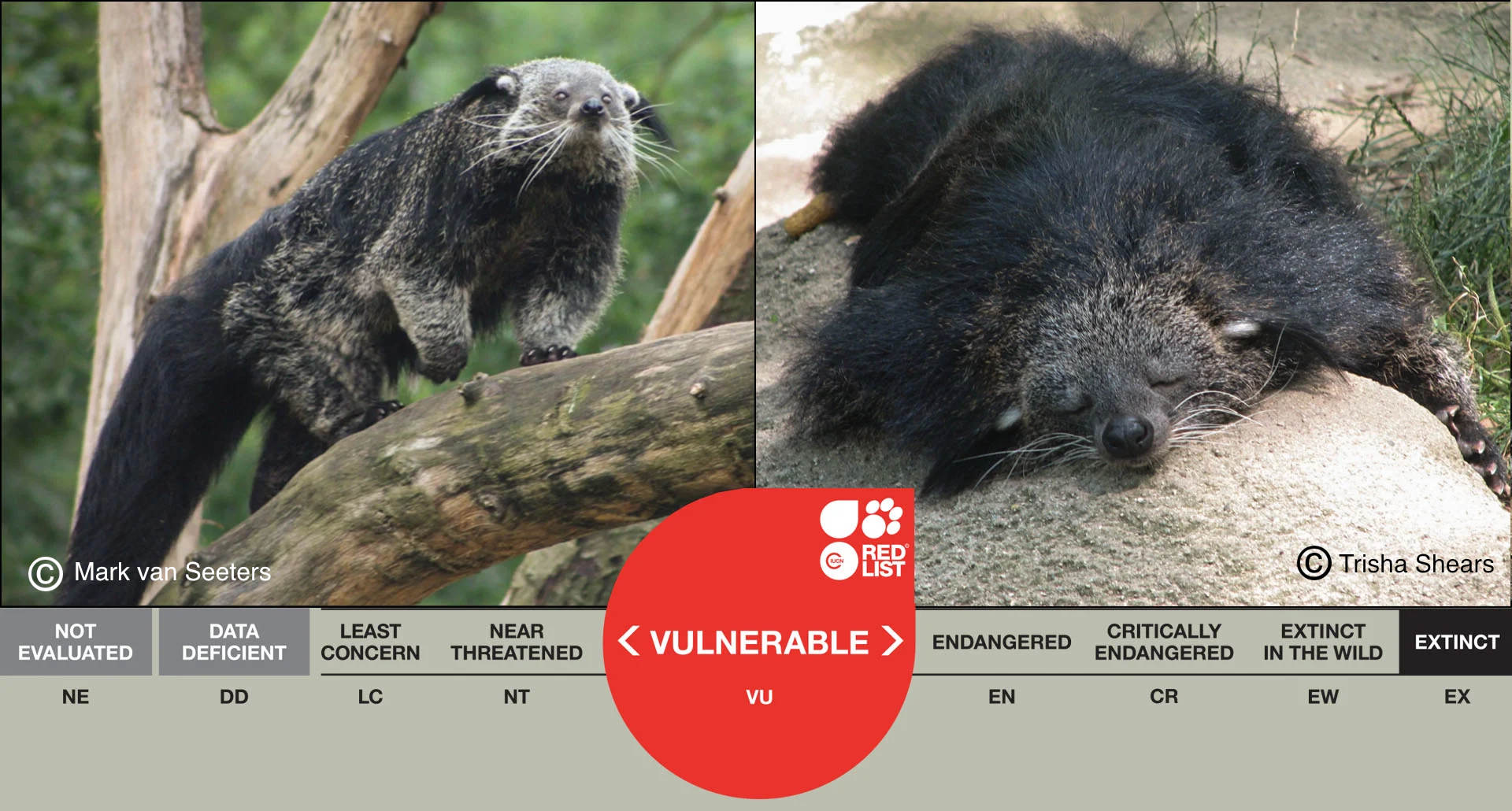
Conservation Status: Vulnerable (IUCN Red List)
Description
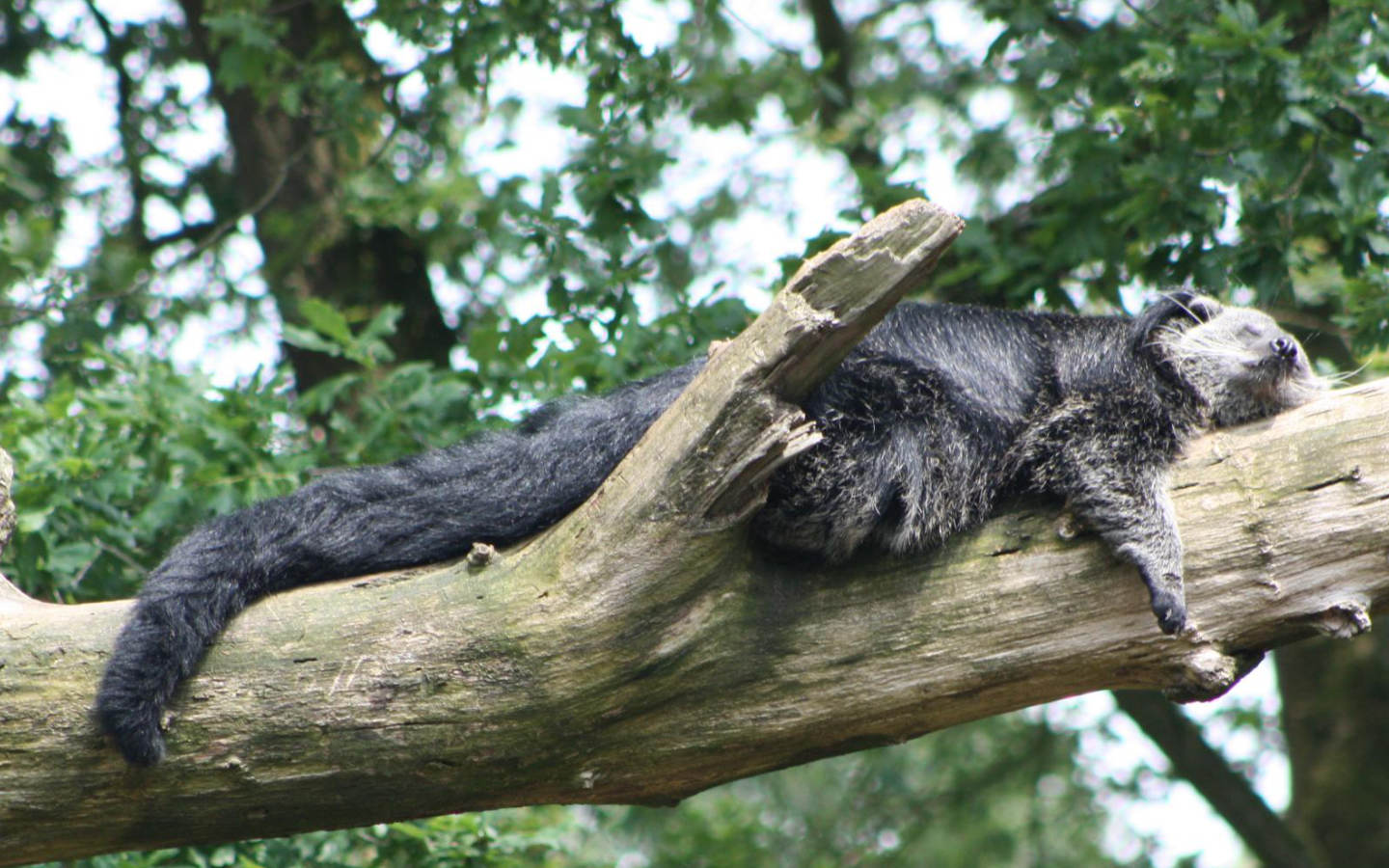
Despite its nickname, the binturong is neither a bear nor a cat. It is the largest member of the civet family and is found throughout the forests of South and Southeast Asia, including Laos. Adults typically weigh between 9 and 20 kg and are covered in long, shaggy black fur with distinctive white whiskers and ear tufts.
Distribution and Habitat
Binturongs inhabit tropical and subtropical forests, where they spend most of their lives in the canopy. They are primarily found in mature forests with plenty of fruit-bearing trees, although they can also occur in secondary forests.
The Tail
One of the binturong's most remarkable features is its tail. Nearly as long as its body, the tail is prehensile, meaning it can grip branches and help support the animal while climbing. This adaptation is extremely rare among carnivorous mammals and allows the binturong to move confidently through the forest canopy, using its tail almost like a fifth limb.
Behaviour
Binturongs are mostly nocturnal and spend much of the day resting in trees. They are generally solitary animals, although pairs and family groups are occasionally observed. Their movements are slow and deliberate, and they are excellent climbers.
Diet
Although classified within the order Carnivora, binturongs are primarily fruit eaters. Figs make up an important part of their diet, but they also consume leaves, shoots, insects, eggs, and small vertebrates when available.
Ecological Importance
Binturongs play an important role in forest ecosystems as seed dispersers. Many of the fruits they consume pass through their digestive system, allowing seeds to be spread throughout the forest. This helps maintain healthy and diverse forest habitats.
Conservation
The binturong is currently listed as Vulnerable by the International Union for Conservation of Nature (IUCN). Its population is declining due to habitat loss, forest fragmentation, hunting, and illegal wildlife trade. Protecting Southeast Asia's remaining forests is essential for the long-term survival of this unique species.
Sources
IUCN Red List – Arctictis binturong
Smithsonian National Zoo & Conservation Biology Institute
National Geographic
Encyclopaedia Britannica
Copyright
Images under license : CC BY-SA 2.0
https://www.flickr.com/photos/19598613@N00/762624878
https://www.flickr.com/photos/10107255@N03/