Rice Paddy Snake

The Rice Paddy Snake of Thakhek
For most of the climbing season, you will not see a rice paddy snake around Green Climbers Home. But during the rainy season and the first weeks afterwards, while parts of the valley are still flooded, this small water snake can be surprisingly common.

When and where to spot it
Rice paddy snakes prefer shallow, flooded habitats such as rice fields, temporary ponds and muddy ditches. Around camp, they can be observed during the rainy season and briefly afterwards - usually until the beginning of November.
The best time to look for them is after sunset, while puddles and flooded areas remain in the valley. With a flashlight, you may spot one moving through shallow water in search of small fish and frogs.
Despite their rather heavy appearance, rice paddy snakes can move surprisingly fast. When approached or cornered, they immediately try to escape. Their sudden movements can be quite dramatic, and they sometimes fling their bodies forward in a way that almost looks like jumping.
What does the rice paddy snake look like?
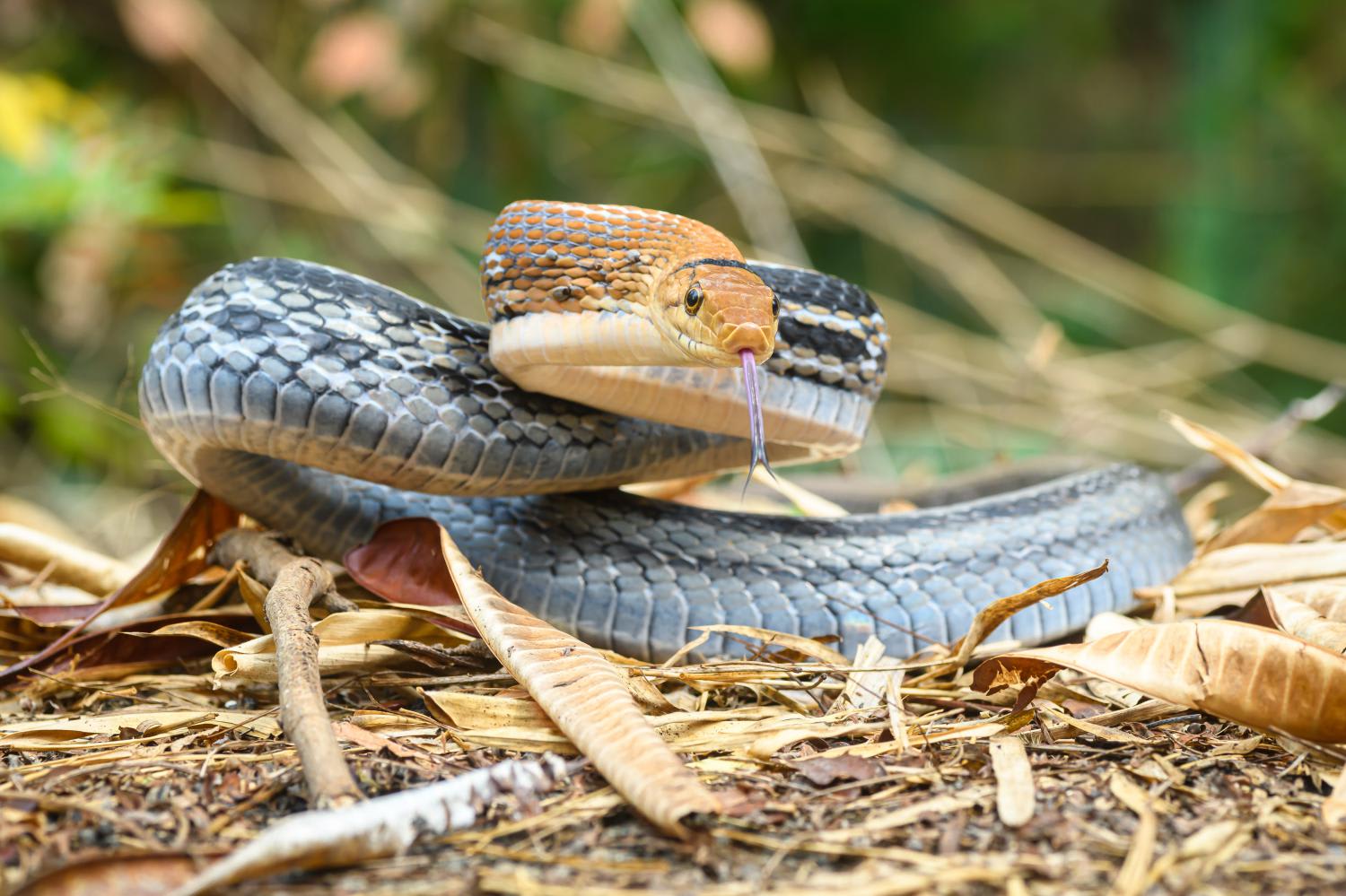
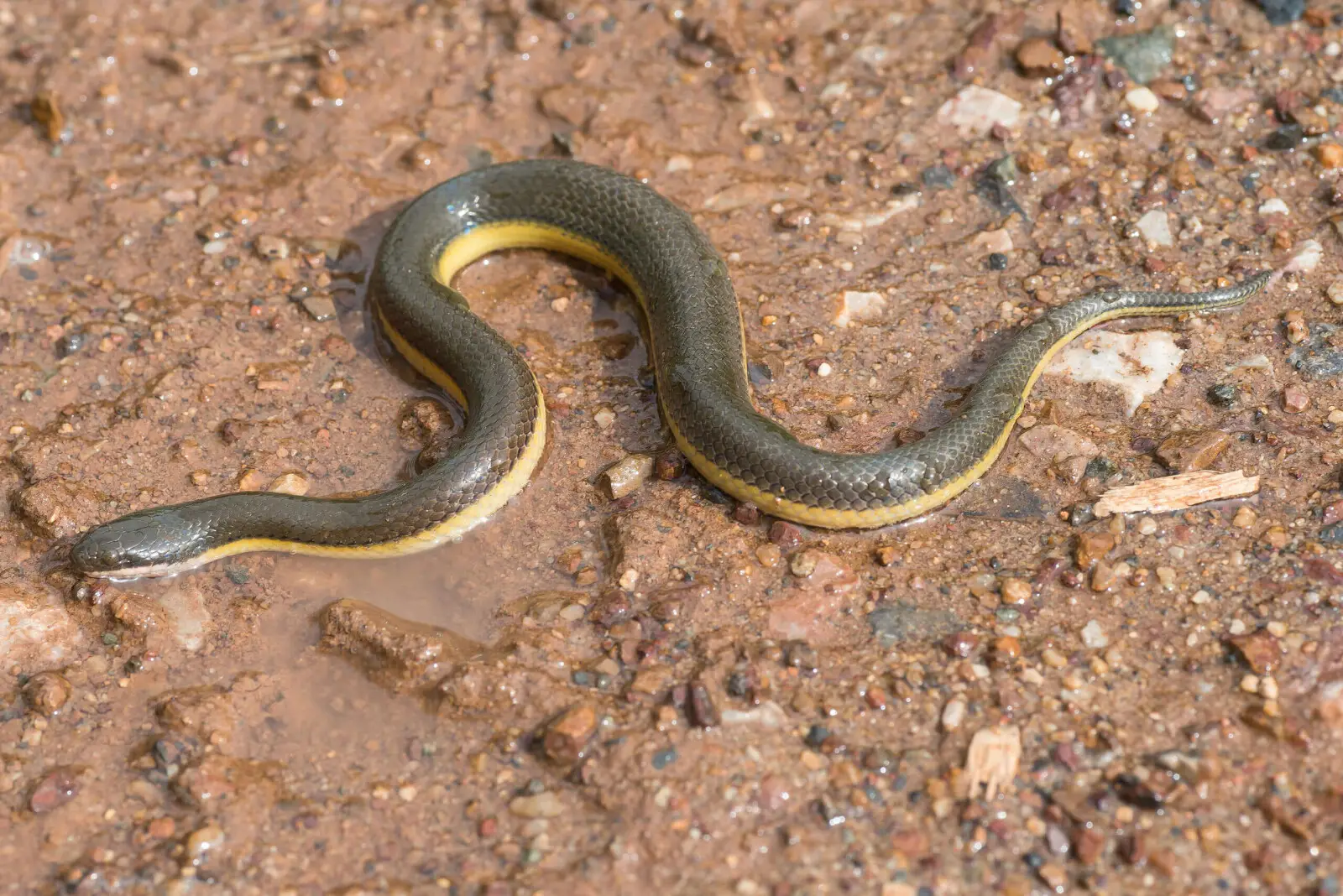
Adult rice paddy snakes are generally around 35 to 55 centimetres long, although larger individuals can reach approximately 70 centimetres. Their smooth upper body is usually dark grey, olive-brown or almost black, while the underside is noticeably lighter and can be yellow or orange.
Their eyes and nostrils are positioned high on the head. This allows the snake to see and breathe while keeping most of its body hidden beneath the surface, an useful adaptation for life in shallow water and mud. Combined with its small size, plain dark body and preference for flooded habitats, the contrasting belly makes the rice paddy snake fairly easy to recognize.
Is the rice paddy snake dangerous?
Rice paddy snakes are mildly venomous and have their fangs toward the back of the mouth. They use their venom to subdue small prey such as fish and frogs, but they are not considered dangerous to humans. People who have been bitten generally report only a burning or irritated feeling around the bite mark, sometimes accompanied by slight local swelling. No serious whole body effects have been reported.
Bites are unlikely unless the snake is caught or handled. Its first response is to escape, and its fast, frantic movements are an attempt to reach the safety of the water or mud, not an attack. As with any unidentified snakebite, seek medical advice if the species is uncertain or symptoms begin to spread.
A familiar snake with a new name
For many years, rice paddy snakes found across Southeast Asia were identified as Hypsiscopus plumbea. This is still the scientific name used by many field guides, websites and older observations.
More recent research found that the rice paddy snakes living in central Laos belong to a separate species. In 2022, they were formally described as Hypsiscopus murphyi, using specimens from Khammouane Province.
Therefore, the rice paddy snakes observed around Thakhek should now often be identified as Hypsiscopus murphyi, even though you will frequently find nearly identical snakes from the region listed under the older name Hypsiscopus plumbea.