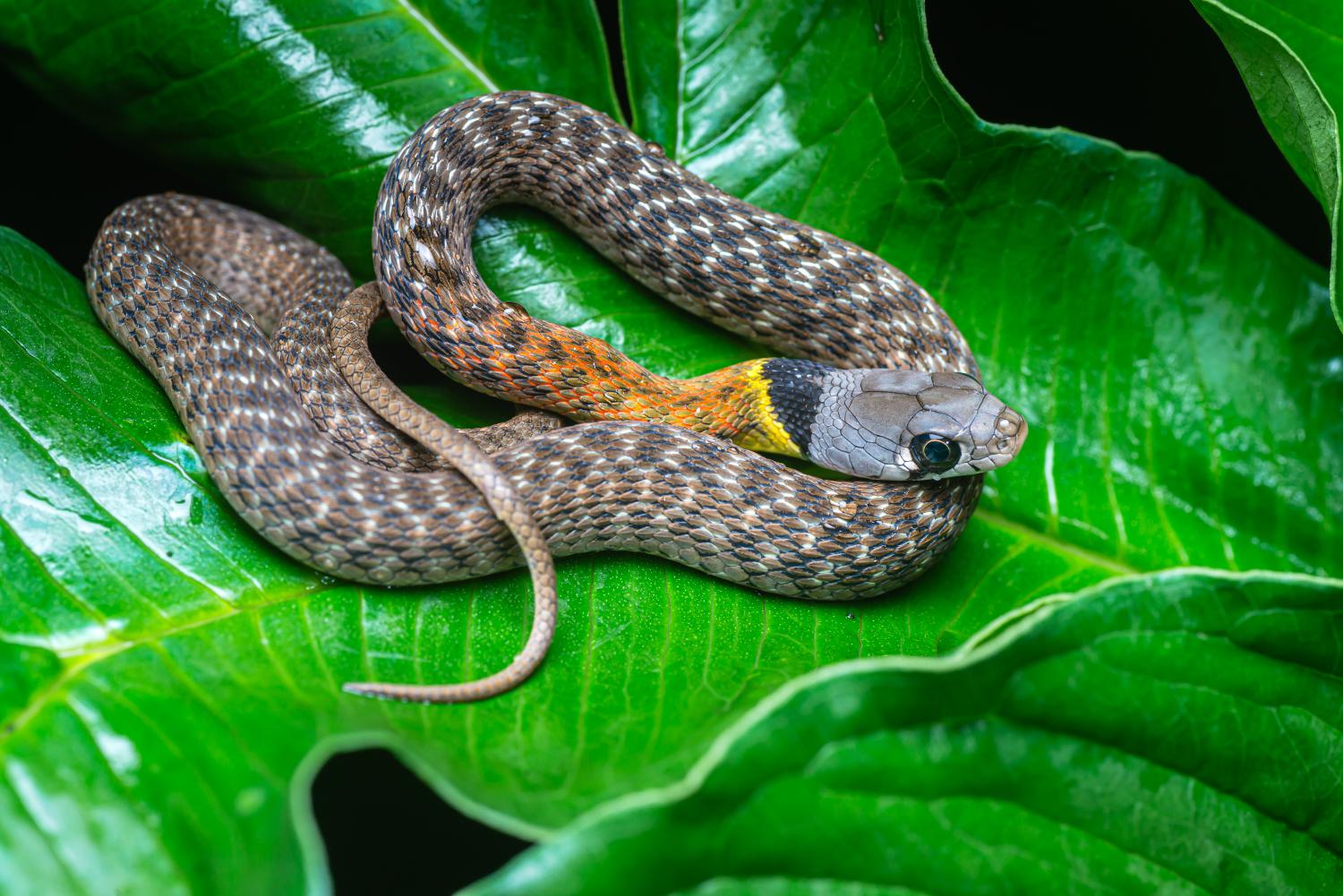
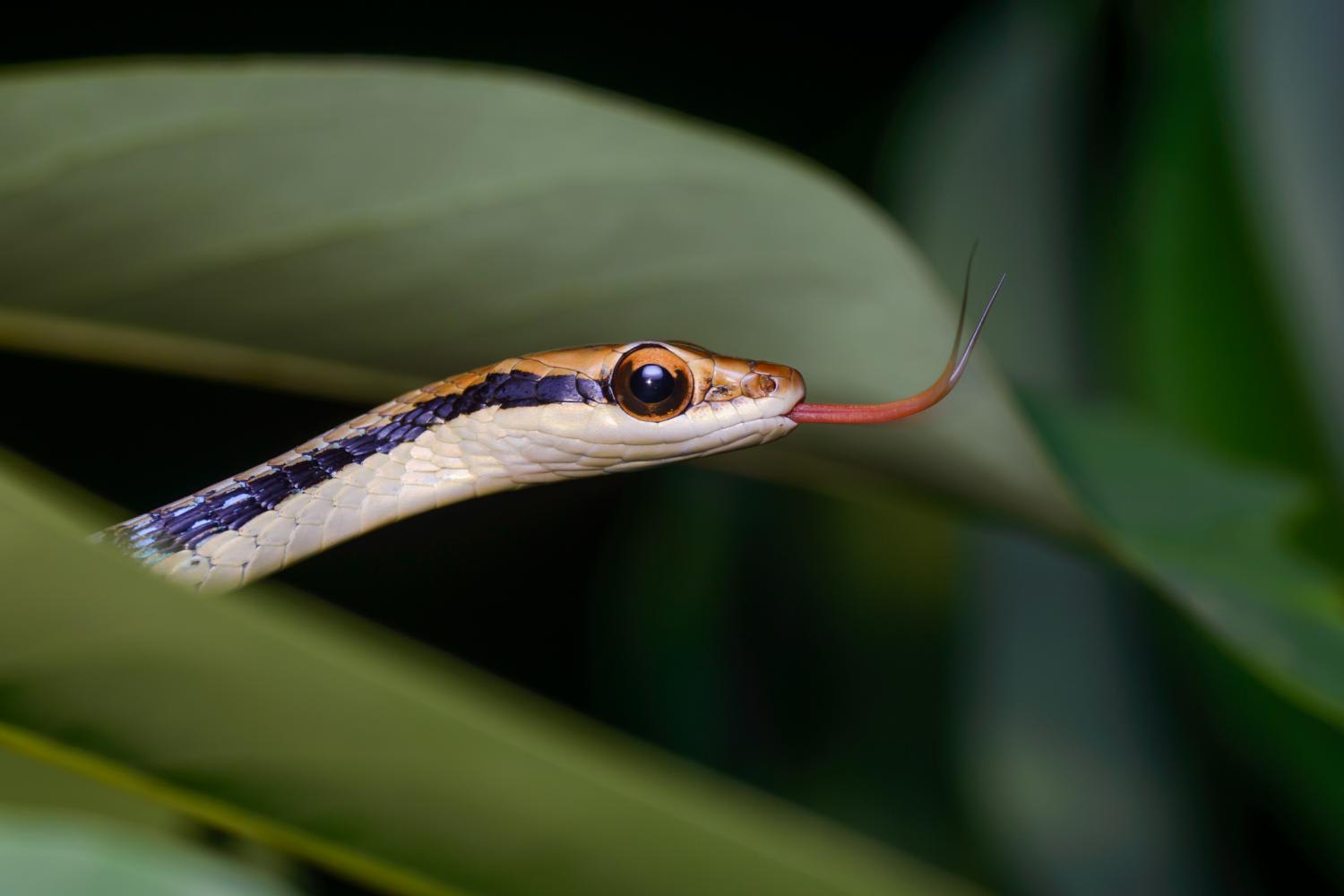
With its beautiful pattern and striking red neck, the Siamese red-necked keelback(Rhabdophis subminiatus) is easy to admire, but its bright colours also serve as a warning. This unusual snake is both venomous and poisonous, two terms that are often used interchangeably but actually describe different things.
Venom is actively delivered through a bite or sting, while poison causes harm when it is eaten, touched or absorbed. The red-necked keelback can inject venom through enlarged teeth at the back of its mouth. At the same time, it stores toxins obtained from the poisonous toads it eats in special glands beneath the skin of its neck, helping protect it against predators.
As a rear-fanged snake with a generally calm and reluctant-to-bite nature, the red-necked keelback rarely causes human envenomation. Nevertheless, any bite must be treated as a medical emergency. Its venom is delivered through enlarged teeth at the back of the upper jaw, making prolonged bites particularly dangerous, although serious envenomation can also follow a brief bite.
Where to find and how to identify.
Because frogs and toads are among its preferred prey, the Siamese red-necked keelback is usually found near streams, caves and other damp places where amphibians are abundant. Around the camp, it is most often observed during October and November, when the valley remains wet after the rainy season and frogs and toads are still plentiful.
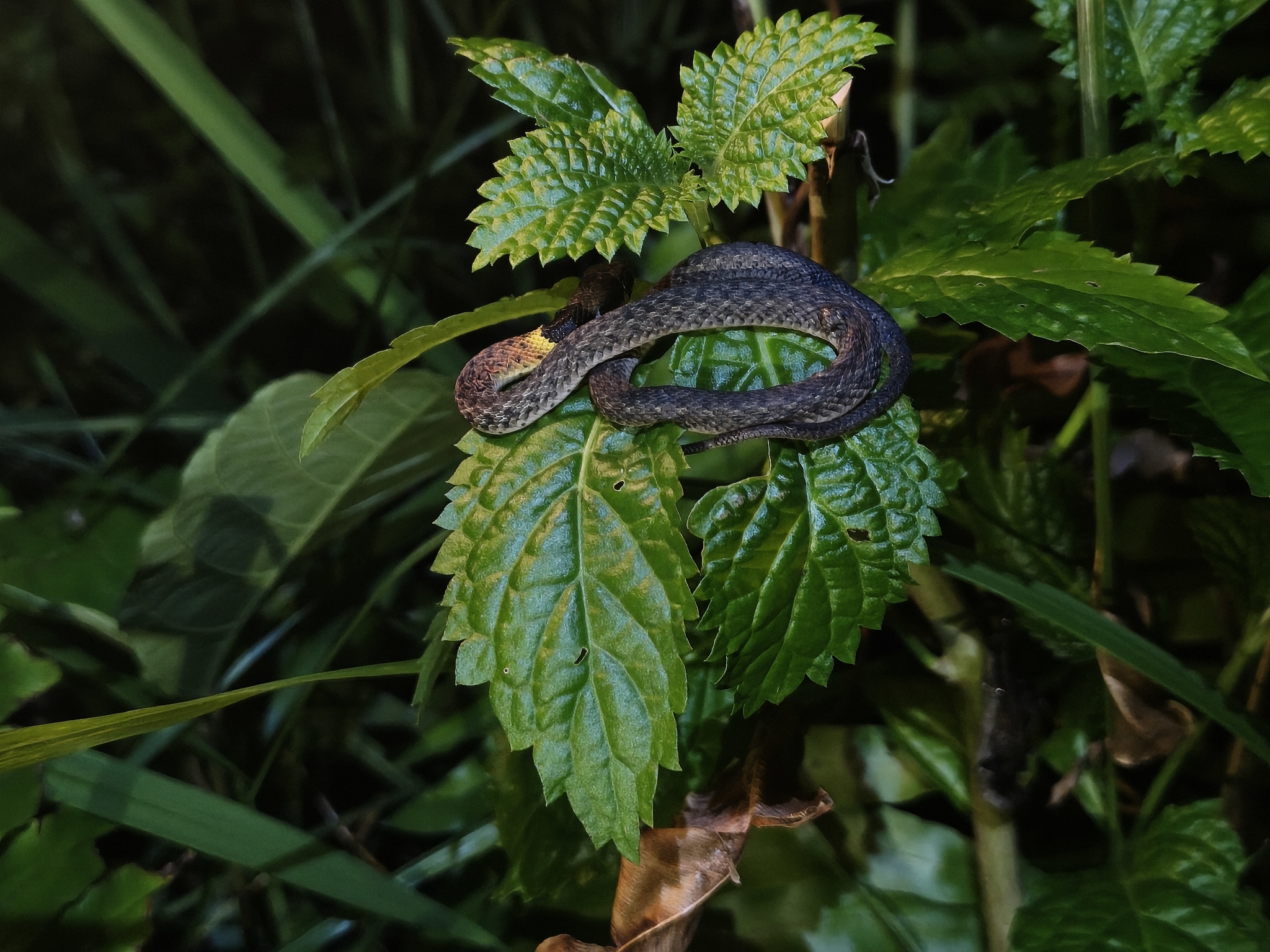
The species is usually easy to identify and is not easily confused with other snakes.Mature snakes reach a length of 70 to 90cm, though some rare individuals can reach up to 110cm. Its body may appear green, grey or brownish, with greenish-yellow highlights creating a subtle checkered black pattern along its length. Juveniles often have a dark grey head and a prominent yellow collar. As the snake matures, the head becomes more olive and the yellow collar gradually fades. Rare melanistic individuals have also been recorded that appear almost entirely black, making them much more difficult to identify. Colour alone should therefore never be used to decide whether an unknown snake is safe to approach or handle.
What does keelback mean?
Keelbacks are snakes named for their keeled scales. Instead of being completely smooth, each scale has a raised ridge running down its centre, similar to the keel underneath a boat. This often gives the snake a rougher, less glossy appearance. “Keelback” does not describe one single species. It is a common name used for numerous mostly Asian and Australian snakes, many of which live near streams, ponds, rice fields and other wet habitats.