Season 2024/25 Part 4
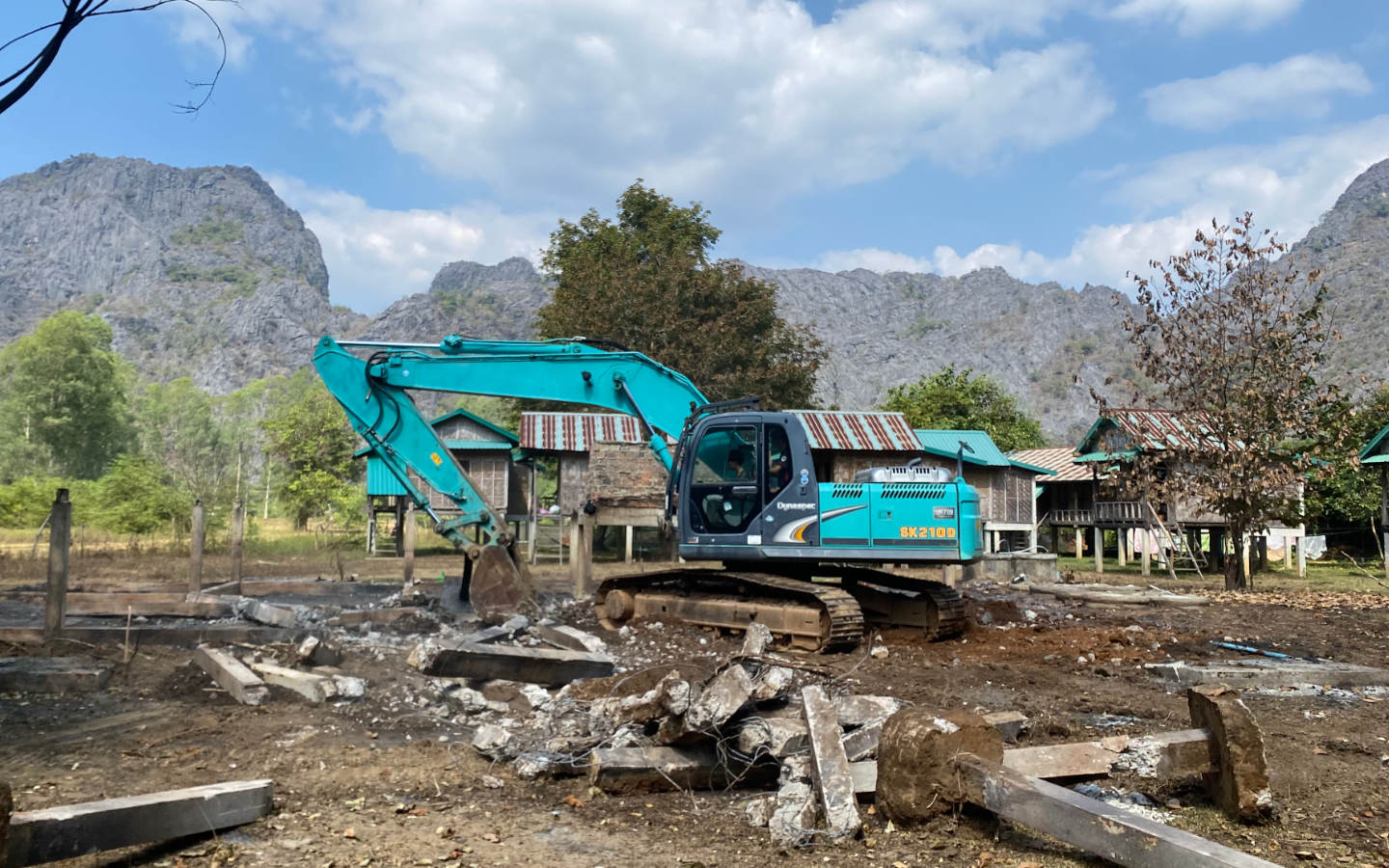
The cleanup happened much faster than expected. Many guests spent their rest days carrying debris, sorting scrap metal, and filling wheelbarrows. Within a few days, most of what remained of the fire was gone. Looking at the empty space, I made the classic mistake of thinking the hard part was over.
Luckily, we had already booked an excavator before the fire. The original plan was to repair the bridge on the way to Camp 1. Now it helped clear what was left of the restaurant. At least food was not an immediate problem. Guests could eat at Camp 2 while we figured out what came next.
A plan for a pop-up restaurant started to form. The training area already had a roof and sat close to the water tower. With enough imagination, it could become a kitchen, bar, and restaurant. We only needed walls, furniture, equipment, and almost everything else.
The old pizza restaurant in Thakhek that had closed during Covid still had tables and chairs in storage and offered to donate them. In the jungle, we found fallen trees that could become pillars for a windscreen. The woven bamboo panels we use for bungalow walls were cheap enough to enclose the kitchen area.
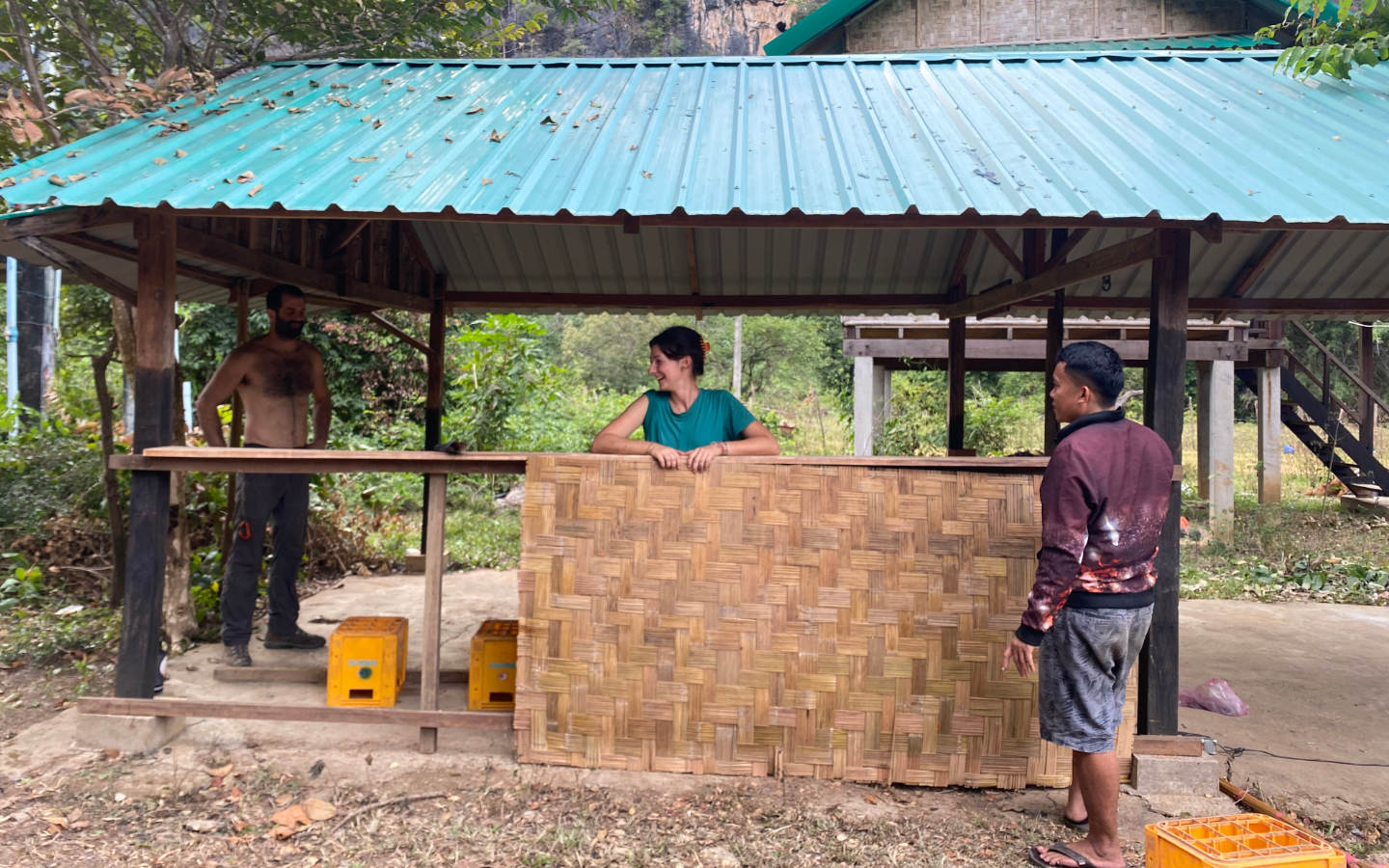
Building in Laos was never easy. Building after losing nearly every tool made it even more interesting. Part of the problem was my Lao language skills. Another part was not knowing where to get anything. In Europe, if you need a specific item, you type it into Google and drive to the nearest shop. In Thakhek, typing English into Google mostly resulted in confusion.
"Just use Google Translate," I thought. Google Translate had other plans. I quickly discovered that it knew Lao only slightly better than I did. The difference was that it was extremely confident about being wrong.
One day at the police station, I was trying to get temporary papers for my passport. The officers asked for some specific documents. I typed everything into Google Translate and showed them the screen. They looked confused. I looked confused. After a while we figured out why. The officers were asking for passport documents. Google Translate was asking for fresh banana leaves.
The funny part is that I only understood this much later. One day the kitchen staff asked me for the appropriate documents for the fish. After another confusing conversation, I finally realized they wanted fresh banana leaves to wrap the fish before putting it in the oven. Apparently Google Translate had not been completely wrong. It had simply introduced the topic at a highly inappropriate moment.
The other challenge was tools. The fire had taken most of the ones we owned. Every job became an exercise in improvisation. Without the right screwdriver, I used a knife. If that didn't work, a coin. If that didn't work, a machete. Almost everything could be done eventually. The problem was time. A task that should have taken one minute often turned into thirty. In the morning, I would make ambitious plans for the day. By lunchtime, I was celebrating the successful installation of three screws.
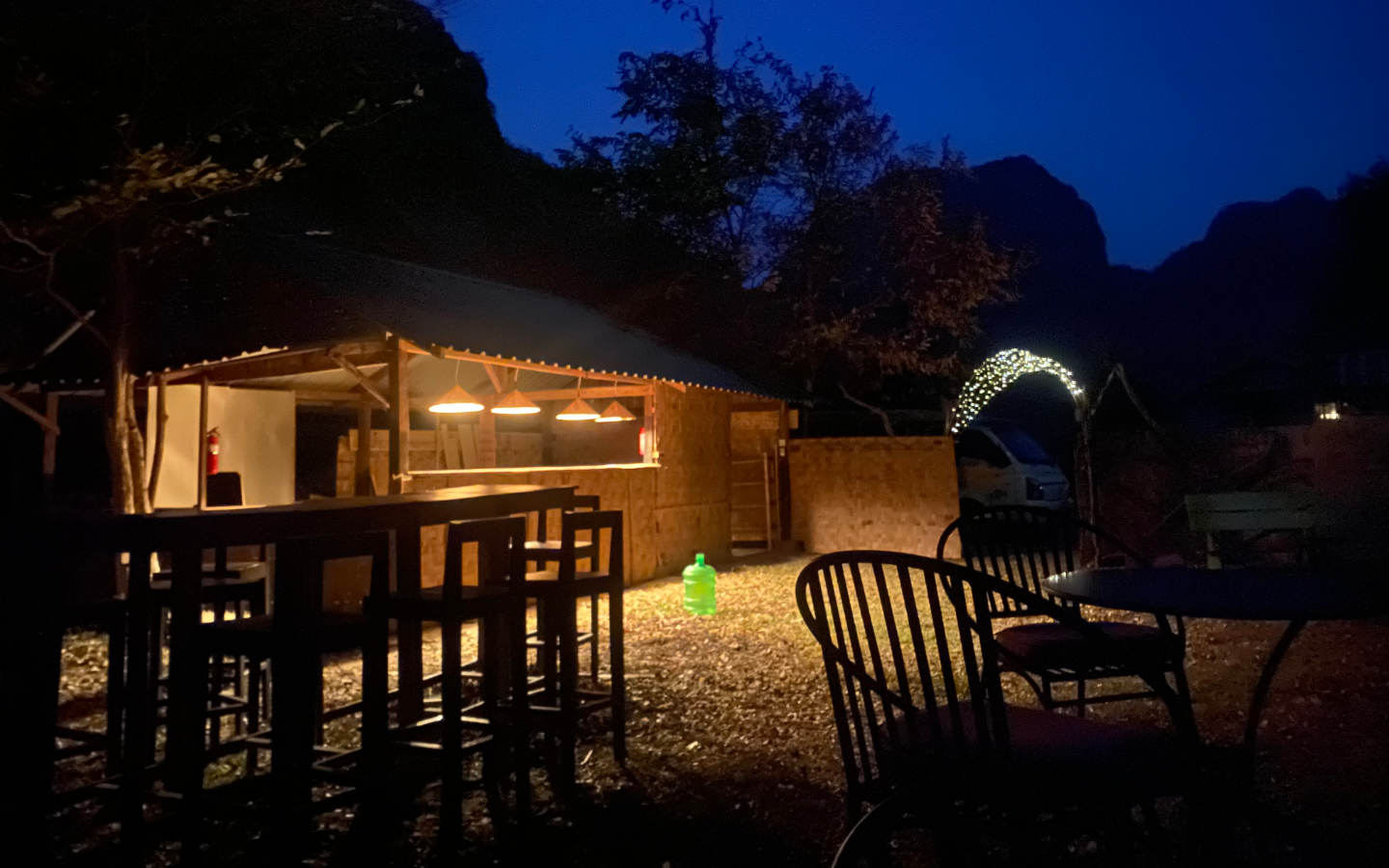
Every time somebody checked out of Camp 1, we used the money to replace another missing piece. Water pipes. A sink. A stove. A fridge. Plates. Cups. A water filter. Slowly, the restaurant started to appear.
At the time, these struggles were exhausting. Every misunderstanding cost time. Every missing tool cost energy. But those are rarely the stories people tell later. Years from now, nobody will remember a successful trip to the hardware store. They will remember the day Google Translate demanded banana leaves at the police station.
Four weeks after the fire, we were ready. The evening before opening, staff and volunteers shared a test dinner. The kitchen was running, the fridges were cold, and the restaurant looked much better than I had imagined when we first stood in the ashes. For the first time since the fire, we had finished something.
The next morning, the season would begin.