Season 2024/25 Part 6

Bureaucracy, Bo Pen Yang and a Passport
The crux season was over. The camp was still full, but the rhythm had changed. Many guests staying in town had already left. The restaurants were quieter, the crags less crowded, and everyone on the team knew exactly what to do. After the chaos of the first months, Green Climbers Home finally ran almost by itself. For the first time in weeks, I had time to deal with my own problems. The first one was my passport.
Since it had burned in the fire, I needed a replacement. I contacted the German embassy in Vientiane, explained the situation, and received a simple reply: before they could issue a new passport, I needed a police report from Thakhek. Simple. The police report I already had apparently only confirmed the local investigation. The embassy needed a different document. Back to the police station.
Day one.
After visiting three different departments, because nobody was entirely sure who was responsible, I eventually found myself in the Tourist Police office. Six police officers were watching a Thai telenovela. Nobody spoke English. One woman spoke surprisingly good French. Unfortunately, I don't. Google Translate was producing complete nonsense, so we eventually settled on a creative mixture of my very rusty Vietnamese from two years in Vietnam during COVID, the handful of Lao words I had learned recently, and lots of pointing.
It worked. Kind of. The whole process took around four hours. Occasionally something dramatic happened in the telenovela, important enough for everyone to pause our paperwork and watch for a few minutes. One officer carefully wrote everything down with pen and paper before telling me to come back the next day. Everything still had to be typed into the computer so I could sign it.
Day two.
The next day I returned with passport photos. The officers looked at my perfectly German, DIN-standard biometric passport photos. They didn't like them. Instead, someone grabbed a phone, took a new picture against the office wall, and declared it much better. Fair enough. I asked Green Discovery to translate the Lao document so I knew what I was signing. Everything looked correct, so I signed it and was told to come back the following day because someone higher up needed to add another signature.
Day three.
Two different officers were working that day. The signing ceremony began. In Laos, signatures often involve fingerprints, so plenty of ink was involved. One of the new officers spoke Vietnamese with a Hanoi accent, the version I had learned during my time in Vietnam. My Vietnamese is far from fluent,it's mostly enough for ordering food, making jokes, and somehow getting by, but at least we were speaking the same version. He understood my broken Vietnamese, and for the first time I could understand more than a few words of the replies. The previous officer had spoken a Quảng Bình/Quảng Nam-style border dialect with a distinct Thakhek flavour, which was far beyond my abilities. Communication was still slow, but it had suddenly become possible. Everyone was laughing, and the atmosphere was great. Finally, I was about to receive my precious document.
Then one officer asked why I spoke a little Lao and Vietnamese.
"I love it here," I answered. "I've been coming here for my winter holidays since 2017."
The smiles disappeared instantly.
"You cannot stay in Laos that long," he said.
He looked genuinely upset.
I suddenly realized what had happened.
He thought I had been living in Laos continuously since 2017.
I tried to explain.
Unfortunately, my explanation somehow made things even worse.
My document quietly disappeared from the desk.
I was escorted into another building.
Another officer sat down to watch me while I waited.
An hour later, two men in civilian clothes entered the room. One of them spoke English.
Finally.
It still took quite a while until the misunderstanding was sorted out.
Then everyone burst into laughter.
Bo Pen Yang. I received my document.
The German Way
I immediately took a photo and replied to the existing email conversation with the embassy.
"I have the police report now and would like to make an appointment."
The answer came the next day.
Subject: New Passport
"Why do you need an appointment?"
"To apply for a passport."
"What happened to your old one?"
"It burned."
"Do you have a police report?"
Apparently nobody bothered to scroll up through the previous conversation.
I copied the entire conversation into one reply.
Finally, everyone was on the same page.
"We'll let you know when an appointment is available."
A week passed.
Then another email arrived.
"You can come tomorrow between 10:00 and 11:00."
Seriously?
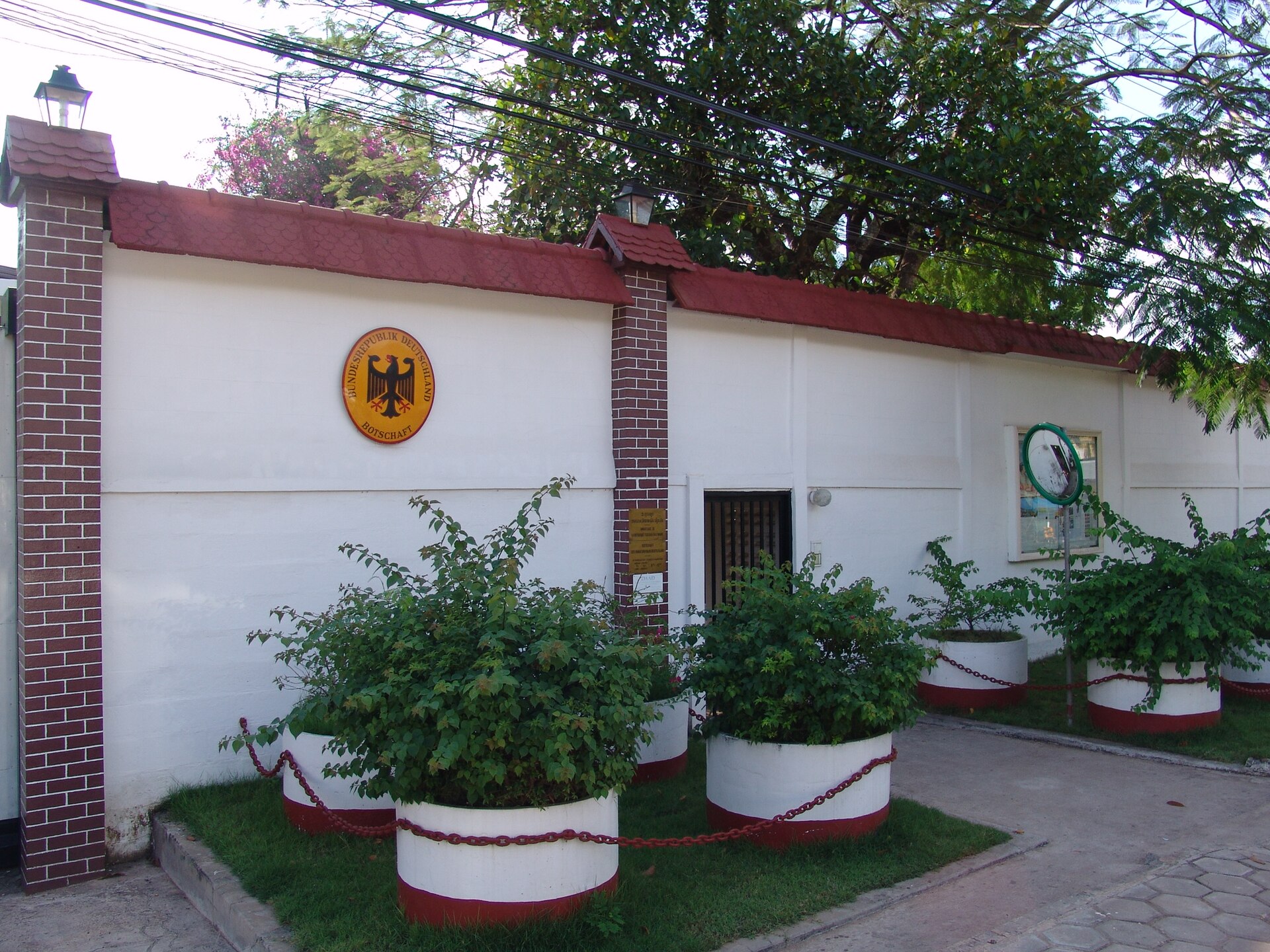
I stared at the screen for a while, climbed into the truck, and drove straight to Vientiane.
The embassy was surprisingly quiet.
The Lao security guard asked me something.
I had absolutely no idea what he had said.
He repeated it.
Still nothing.
I tried speaking Lao.
Now he seemed confused.
Finally, he switched to English.
"German. Do you speak German?"
We both laughed and settled on English.
Inside was a beautiful garden, a large swimming pool, and a very friendly Lao receptionist. I was the only visitor, so there was no waiting at all.
The application went smoothly.
Then came the final question.
"Do you have your birth certificate?"
"Of course."
It was safely stored on my laptop.
"I can email it."
"No, it needs to be printed."
She pointed to a print shop in town on Google Maps.
"You have about thirty minutes before we close."
I walked outside, then stopped.
Something didn't make sense.
I walked back in.
"Just one question."
"Do you send my passport application by post to Germany?"
She looked confused.
"No, everything is sent electronically."
"So... I drive into town, print my birth certificate on paper, bring it back, and then you scan it so it becomes digital again?"
She paused for a second.
Then laughed.
"Actually... yes."
"Wouldn't it be much easier if I simply emailed it to you? I know that's not the official German procedure, but could you make an exception?"
Another short pause.
She smiled.
"Okay."
The email was accepted.
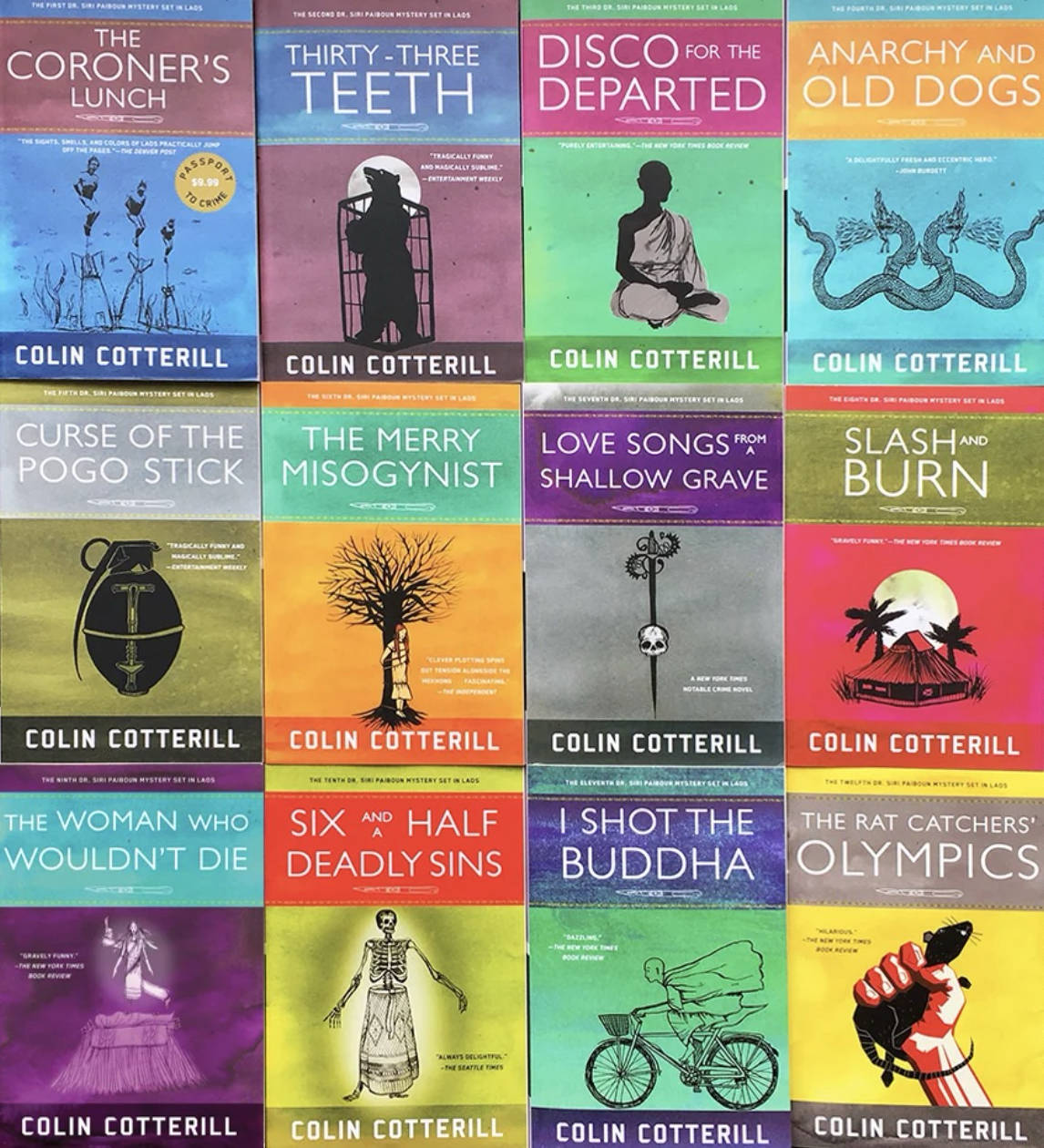
My passport application was finished. I suddenly had a free afternoon, so I wandered through Vientiane. It's a charming little capital and well worth visiting for a day or two. My final mission was a small English bookstore. I was hunting for more of Colin Cotterill's wonderful Dr. Siri novels. I had discovered the first one on the Green Climbers Home book exchange shelf and was immediately hooked.
Set in Laos during the 1970s, the books capture the same mixture of bureaucracy, absurdity, warmth and humour that I kept running into in real life. Written with a wonderfully dry sense of humour, they are much more than crime novels. They offer a fascinating glimpse into everyday Lao life and culture. After spending three days chasing a police report, the timing couldn't have been more perfect. I walked out with every Dr. Siri book they had in stock and hoped I would eventually find the time to read them.
Germany and Laos are about as different as two countries can be. Yet somehow, bureaucracy seems to be a universal language. Same same, but different.
Book tip
If you want to explore Laos in the 1970s beyond the guidebook, pick up one of Colin Cotterill's Dr. Siri Paiboun series novels. Mixing clever murder mysteries with dry humour, memorable characters, and Lao folklore, the series offers a fascinating glimpse into everyday life after the revolution. It's an entertaining way to discover the country's history, culture, and mystical traditions while following an eccentric coroner as he solves impossible crimes.
A small note: We never use affiliate links or earn commissions from the things we recommend. If we share a book, a piece of gear, or a project, it's simply because we genuinely like it and think it's worth sharing with the climbing community. Supporting good people and good ideas has always been part of what Green Climbers Home is about.
https://www.colincotterill.com/writer-biography/
Beyond writing the Dr. Siri Paiboun series, Colin Cotterill started the Books for Laos project, which sends books to Lao children and helps sponsor trainee teachers. He has also supported Big Brother Mouse, a nonprofit that publishes affordable children's books and promotes reading throughout Laos.
https://www.bigbrothermouse.com/
https://www.books-for-laos.org/en/
Copyright :
https://www.pexels.com/@itsehsanh/