Season 2024/25 Part 8
First fatal climbing accident in Laos and the aftermath
This chapter describes the first fatal climbing accident in Laos from my personal perspective. It is not intended as an accident analysis or investigation report. It is simply my account of the days that followed and how I experienced them.
The incident itself—including the sequence of events, the identified cause, and the lessons learned—is covered separately in the factual article "Accidents and Lessons Learned."
The Call
I was in town to organize a few things. After weeks of bureaucracy, I finally got the news that I could pick up my passport in a few days. Then my phone rang. It was Mal. She was struggling to get the words out.
"There... there was an accident."
Somebody had fallen from the anchor. Volunteers and guests had started first aid immediately and were on their way to the hospital with Mr. Noy. I headed for the hospital. When I arrived at the emergency room, nobody had arrived yet. I waited outside where the ambulances usually stopped. I called Mr. Noy.
"The TukTuk was too slow," he said. "We stopped a pickup truck."
Just as he finished the sentence, a pickup pulled in beside me.
On the truck bed I saw our volunteers. They were performing CPR. For a split second my brain tried to recognize the face.
Do I know him?
Then one of the volunteers shouted.
"Dennis! Right to the head!"
He pointed at the injured climber.
The next thing I heard was, "One, two, three!"
We lifted him off the truck. As we raised him, his legs dropped lifelessly and pushed the stretcher away. Two nurses rushed over to steady it, and together we rolled him into the emergency room while one of the guests continued chest compressions without stopping. The Lao medical staff took over. The driver of the pickup stood in the room filming everything with her phone. We pushed her outside and left the room ourselves. Then we waited. The injured climber's friends arrived shortly afterward. Still no news. We hugged each other while they told me what had happened at the crag. Then a doctor called me inside.
"How long did they do CPR?" he asked.
"At least forty minutes."
He nodded.
"I only determined the death."
Then he walked away. I stood there for a moment. I didn't want to go back outside.
How was I supposed to tell them? Why was I the one who had to say it?
I opened the door. One of his friends looked at me.
Our eyes met, and in that split second, she knew.
She collapsed to her knees before I had said a single word.
I walked away. I felt lost. Behind the emergency room was a narrow alley. Nobody was there.
The Aftermath
I sat there for a while before calling Fai. She answered immediately. I told her he had died. She said they were still at the route. They had secured the area, taken photographs, and were trying to understand what had happened.
"But we can't find the harness," she said.
Then she asked if I could talk to the climbers. They had just lost their friend. And now I was supposed to investigate the accident? Still, I walked back. I offered my condolences. The belayer started talking about what he thought had happened. That gave me the opportunity to ask about the harness. At first nobody knew where it was. A minute later someone handed it to me. I looked at it. One gear loop had broken clean off. The belayer stared at it. Until that moment nothing had made sense to him. Now it did. The hospital staff returned and explained the next procedures. There was nothing more we could do. We drove back to camp. That evening the management sat together. We reconstructed the sequence of events as best we could.
Then we had to inform the guests. We wrote a short announcement explaining what had happened. One of our guests happened to be a grief counselor and offered to speak with anyone who needed support. Later that afternoon the police arrived. The officer I had met during my passport marathon greeted me in Vietnamese. I left them with Fai, who explained everything that had happened. The camp had never been this quiet.
Lost in Translation
At 10 p.m. it was time to close the kitchen.
The staff called out, "Dennis, ma ni!"
I walked into the kitchen. Something seemed wrong.
They pointed toward the compost bin.
"Phi! Phi!"
I didn't understand.
Then someone said, "Ma! Ma!"
Now I was even more confused.
"I know," I answered. "Ma leo." (ມາແລ້ວ – "I've already come.")
They laughed and shook their heads.
"Tieng Viet, ma (ma). Pasa Lao, phi (ຜີ)."
In Vietnamese, ma can mean many different things depending on the tone and context, such as mother (má), horse (mã), but (mà), grave (mả), or rice seedling (mạ).
They pulled frightened faces. Then I understood. They meant ghost (ma).
The compost dump was outside the camp, between the bushes, in complete darkness. Nobody wanted to take the bucket there. The fear of ghosts is very real in Laos. Until a ceremony could be held to cleanse the valley of bad spirits, I became the designated person to carry the compost out every night.
Another Fall, Another Call
The next morning we held a minute of silence. Then I had to leave for Vientiane to finally collect my passport.On the bus back, my phone rang again. It was Fai.
"Are you sitting?"
"Yes."
This couldn't be good.
"There was another ground fall. At the Roof."
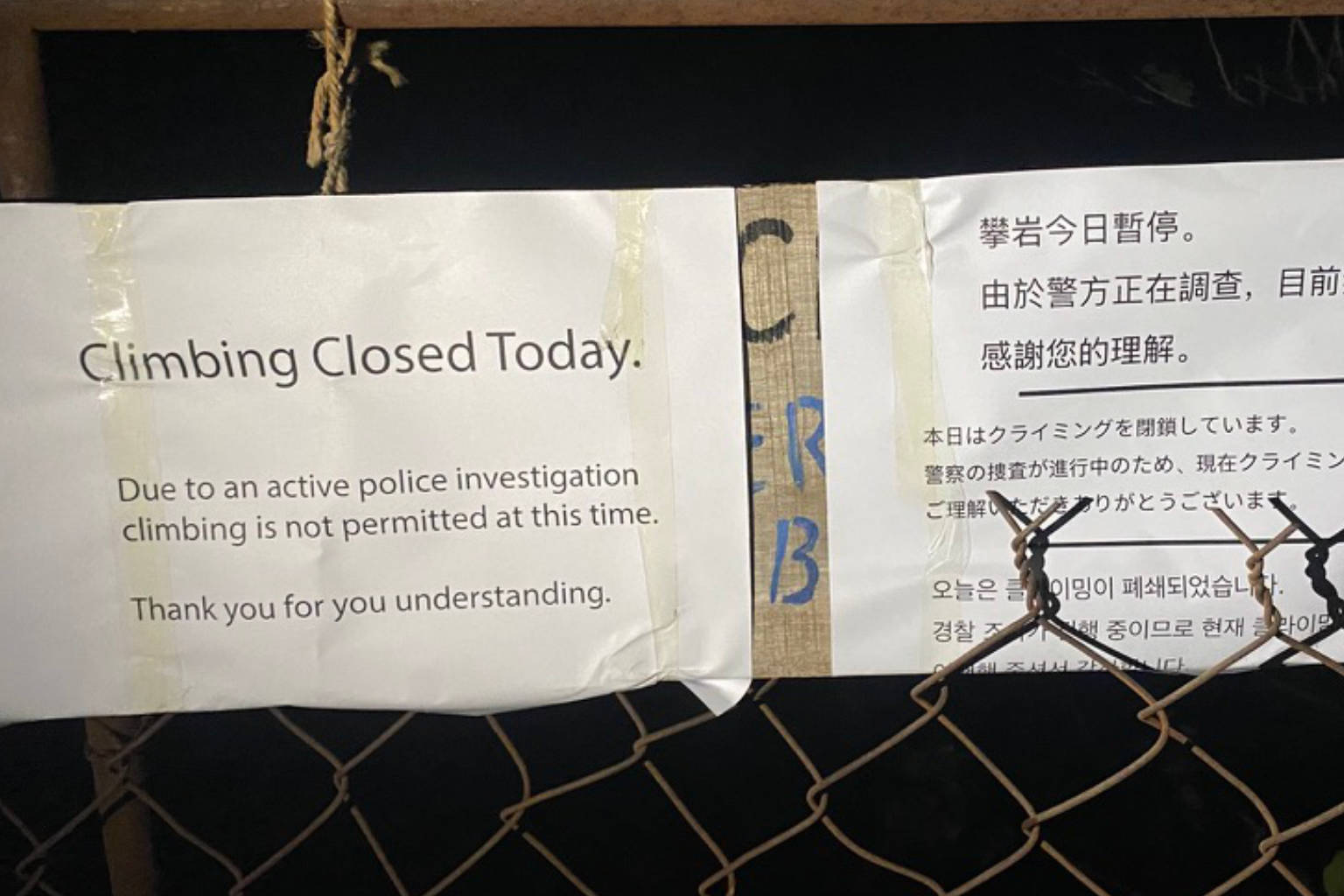
At that moment nobody knew how serious the injuries were or what actually happened. When I arrived back at camp, I learned the climber had been lucky. A broken ankle, nothing more. He had already been treated at the hospital in Nakhon Phanom. But there was more bad news waiting. We were ordered to close the camp on the 6th. The police wanted to carry out another investigation and did not want climbers on the walls while they worked. We informed everyone that climbing would be suspended for one day.
But nobody showed up. By late afternoon we already suspected they wouldn't come. We tried to contact the police. They confirmed that the investigation had been postponed until the following day. So there would be no climbing on the 7th. Again we informed the guests. It wasn't received well, but there was nothing we could do.
The next morning passed.
No police.
The afternoon went by.
Still nobody.
Once again we tried to reach someone responsible.
The answer was the same.
"Sorry. Tomorrow."
The guests became increasingly unsettled. We told them what the police had told us, but after the previous days we also admitted that we could no longer be certain ourselves. The first guests asked to cancel their bookings. They had come to Laos to climb, so we let them cancel free of charge. Some decided to stay one more day. The same thing happened again.
No police investigation.
No climbing.
That was the breaking point.
The Exodus
Almost everyone packed their bags and left, heading for Chiang Mai or Vietnam instead. The entire day was spent checking guests out. By the evening, more than ninety percent of the camp had left. Only a few days earlier, every table had been full, the restaurant buzzing with conversations, climbing plans, and laughter. Now the camp felt like a ghost village.
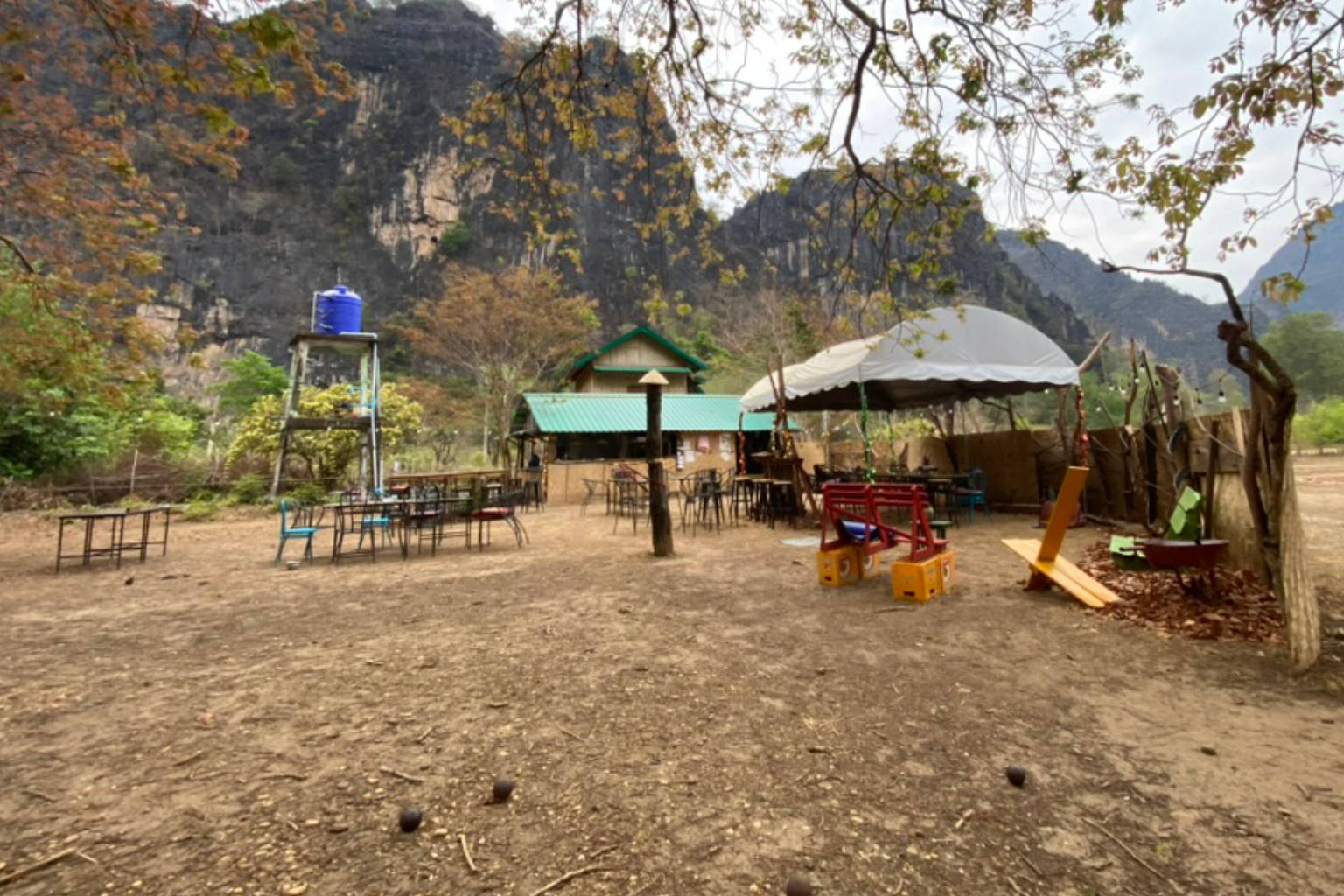
With almost no guests left to look after, the staff from Camp 2 returned to their village. There was simply no work for them anymore. Sitting alone in the Camp 2 restaurant, a thought I had been trying to suppress finally crept in.
What if we never open again?
Many climbing areas in Southeast Asia operate in a legal grey zone. Some disappear as quickly as they appear. Crazy Horse in Chiang Mai had been closed for years. Climbing areas in Vietnam had also been shut down. Laos had always seemed different.
But nobody had died here before.
What if ...?