Accident Reports & Lessons Learned

Why We Publish These Reports
Every climbing accident leaves behind questions, assumptions, and stories that often change as they are retold. The purpose of these reports is not to assign blame or point fingers, but to document the known facts as accurately as possible, separate facts from speculation, and share the lessons that may help prevent similar accidents in the future. Climbing is built on learning from those who came before us. We hope these reports contribute to that tradition.
Fatal Accident at Elephant Sector – 30 January 2025
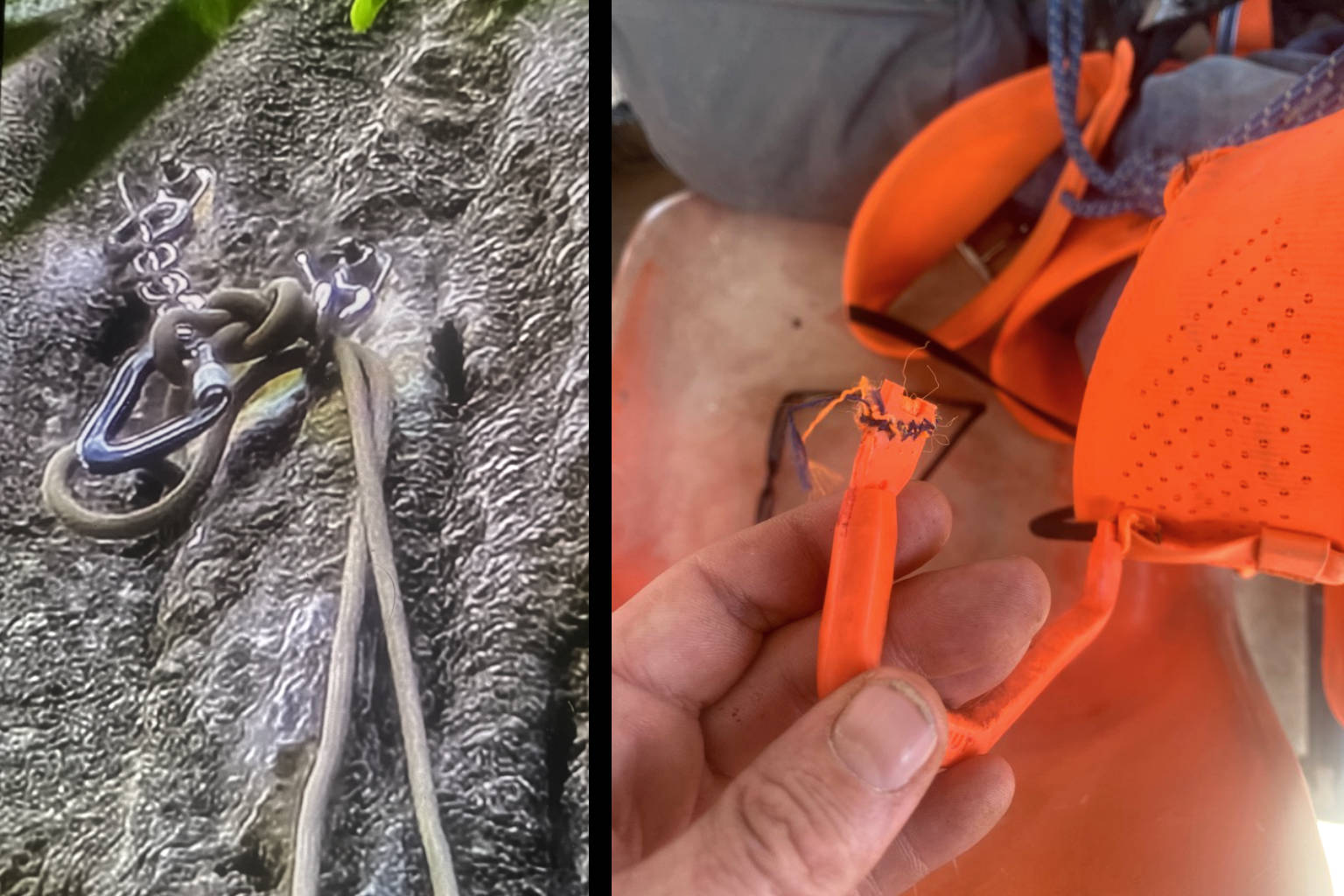
On 30 January 2025, a fatal climbing accident occurred at Elephant Sector in the Thakhek climbing area. An experienced climber reached the top of the route and began cleaning the anchor. After threading the rope through the anchor, he tied a figure-eight knot in the rope and attached it to his harness using a locking carabiner. The locking carabiner was clipped to a gear loop rather than the harness belay loop or tie-in points.After communicating with his belayer that he was ready to be lowered, he leaned back to weight the rope before removing his personal anchor. The belayer began lowering as requested. When the climber reached the height of the first quickdraw, the gear loop failed under load. As a result, he detached from the rope and fell to the ground.Climbers nearby immediately responded, providing first aid and cardiopulmonary resuscitation (CPR). The climber was then transported to Thakhek Provincial Hospital, where he was later pronounced dead.
Investigation Findings
Following the accident, local authorities investigated the incident. The investigation concluded that the accident resulted from a personal error. No failure of the rock, bolts, anchor, rope, belay device, or any other climbing equipment was identified.The climber's rope had been attached to a gear loop, which is designed solely for carrying equipment and is not intended to support the weight of a climber. When the gear loop was loaded during the lowering process, it failed, causing the climber to detach from the rope and fall. The investigation found no evidence that the climbing route, fixed protection, or belay system contributed to the accident.
Lessons Learned
This accident highlights several important lessons for climbers. While the investigation concluded that the immediate cause was the rope being attached to a gear loop, there are broader human factors worth considering.
1. A brief weight test may not reveal an incorrect attachment.
The climber initially weighted the system while still standing against the wall. Because only part of the climber's body weight was transferred onto the rope, the gear loop did not fail immediately. This may have created a false sense of security before the climber committed fully to the lower. A partial weight test should never replace a deliberate visual and tactile check that the rope is attached to the harness belay loop or tie-in points.
2. Fatigue can affect even experienced climbers.
The climber had arrived in Laos only one day earlier after a long international journey. While it is impossible to determine whether fatigue contributed to the accident, travel, jet lag, and disrupted sleep are well-known factors that can reduce concentration and increase the likelihood of simple execution errors. Even experienced climbers should consider these factors when assessing their readiness to climb.
3. Experience does not eliminate human error.
This climber had cleaned anchors many times before. Research by psychologist James Reason shows that highly practiced, routine tasks are particularly vulnerable to "slips" , simple execution errors that occur even when the correct procedure is well known. Familiarity can reduce conscious attention, making routine transitions such as cleaning an anchor especially susceptible to mistakes.
The American Alpine Club has identified the same pattern in decades of accident reports: experienced climbers are not immune to preventable mistakes, particularly during routine procedures such as lowering and rappelling. Experience remains one of the greatest safety factors in climbing, but it should never replace deliberate checks before committing to a life support system.
Further Reading
- James Reason – Human Error (1990): A foundational work on human factors, explaining why experienced people can make simple but serious errors.
- American Alpine Club – Know the Ropes: Human Factors Behind Climbing Accidents: An overview of common patterns found in climbing accidents and practical strategies to reduce human error.
https://publications.americanalpineclub.org/articles/13201217363
Ground Fall at Roof Sector – 5 March 2025
On 5 March 2025, a ground fall occurred at Roof Sector in the Thakhek climbing area. A climber clipped the first bolt with a back-clipped quickdraw. With only the first bolt clipped, the climber was unable to reach the second bolt and made several attempts before falling onto the rope. During one of these falls, the back-clipped rope became unclipped from the first quickdraw. With no remaining protection between the climber and the ground, the climber fell to the base of the route. Climbers nearby immediately assisted the injured climber. She was transported to a hospital in Nakhon Phanom, Thailand, for further medical treatment. Green Climbers Home did not receive a complete medical report. We were informed that the climber sustained a broken ankle.
Investigation Findings
The incident resulted from the first quickdraw being back clipped. No failure of the rock, bolts, quickdraw, rope, or any other climbing equipment was identified.
Lessons Learned
Back clipping does not always result in the rope unclipping during a fall. Many climbers have experienced falls on back-clipped draws without incident. However, this accident demonstrates that the possibility is real, and when it occurs close to the ground, the consequences can be severe. The probability of the rope unclipping depends on several factors, including the orientation of the carabiner, the direction of the fall, rope movement, and how the rope contacts the gate. Because these factors cannot be reliably predicted during a fall, a back-clipped quickdraw should always be corrected before climbing above ground fall height.
The safest approach is to make checking every clip part of your routine. Taking a few seconds to confirm that the rope runs correctly through the carabiner can eliminate a preventable hazard with potentially serious consequences.
Ground Fall at Communist Wall – 27 December 2025
On 27 December 2025, a climber experienced a ground fall at Communist Wall in the Thakhek climbing area. The climber used a clip stick to pre-clip the second bolt before attempting the route. While projecting a dynamic move, the climber repeatedly fell onto the rope and swung back and forth beneath the bolt. During one of these falls, the fixed hanger nut came loose, causing the hanger to detach from the bolt. As a result, the climber fell to the ground. Fortunately, no injuries were reported.
Investigation Findings
The investigation determined that the accident was caused by a loose hanger nut on the second bolt. No failure of the rock, rope, harness, belay system, or other climbing equipment was identified.
Lessons Learned
Repeatedly projecting on a single bolt, particularly at a crux where repeated falls and pendulum swings occur, can gradually loosen a hanger nut, even if it was properly tightened at the start. This is a known issue in outdoor climbing areas and has been documented at crags around the world. Projecting above a single bolt also means relying on a single point of protection. As long as the next bolt has not been clipped, any failure of that protection—whether caused by loose hardware, an incorrect clip, or another preventable issue—can result in a ground fall. For this reason, the first or second bolt deserves extra attention whenever it will be repeatedly loaded during projecting.
Even if a bolt appears secure when you first inspect it, it is good practice to recheck it periodically during extended projecting sessions, especially if the bolt has been repeatedly loaded from different directions. In remote outdoor climbing areas, fixed bolts cannot be inspected on a daily basis. While route developers and local climbing organizations work hard to maintain fixed protection, climbers share the responsibility of inspecting the equipment they choose to trust with their lives. A quick visual and manual check of bolts, hangers, and nuts before climbing—and occasionally during long projecting sessions—can help identify potential problems before they lead to an accident.
If you discover a loose or damaged bolt, stop using it and report it to the local route developers or climbing organization so it can be repaired as soon as possible.
Understanding the Cause, Learning the Lesson
Shortly after the accident, videos and descriptions of the incident appeared on social media. Some of these reports contained inaccurate information about the cause of the fall. This illustrates why we believe factual accident reports are important. Understanding what actually happened allows the climbing community to learn the correct lessons and avoid repeating the same mistakes.
Fatal Accident at Elephant Sector – 14 February 2026
On 14 February 2026, a fatal climbing accident occurred at Elephant Sector in the Thakhek climbing area. A climber fell from near the anchor to the ground while cleaning the route. Climbers nearby immediately responded and the injured climber was transported from the crag for emergency medical treatment. Despite these efforts, the climber later died from the injuries sustained in the fall.
Investigation Findings
Determining the exact sequence of events proved difficult. Immediately after the accident, the climber's companions removed the climbing equipment from the route before it could be documented or photographed. As a result, the original rope setup and equipment configuration could not be be examined or reconstructed. Shortly after the accident, the belayer informed the camp manager that the rope had been too short and had slipped through both his hands and the belay device while lowering the climber.
The following day, during questioning in the presence of the police, the belayer gave a different account. He stated that the climber had tied into the rope approximately four meters from the rope end. According to this account, while cleaning the anchor, the climber accidentally threaded the wrong end of the rope through the anchor. After removing her personal anchor system, she was no longer connected to the belayer's end of the rope and fell to the ground.
It is not uncommon for witnesses or those directly involved in traumatic incidents to recall additional details or revise their understanding after the initial shock has passed. Differences between early and later statements should therefore not automatically be interpreted as intentional inconsistencies. Based on the available evidence and witness statements, the police concluded that the second account represented the most likely sequence of events.
Because the climbing system had been dismantled before it could be examined and witness accounts differed, it is not possible to state with certainty exactly what happened. This report therefore documents the known facts, the witness statements, and the official conclusion reached during the investigation.
Lessons Learned
Although the exact sequence of events cannot be established with complete certainty, this accident reinforces several important principles when cleaning sport climbing anchors.
Preserve the accident scene whenever possible. In the aftermath of a serious accident, the natural instinct is often to collect equipment or clear the area. However, leaving the climbing system untouched until it has been documented can be invaluable for understanding what happened. Accurate documentation helps investigators establish the most likely sequence of events and enables the climbing community to learn the correct lessons from the accident.