Common Bronzeback Snake

The common bronzeback (Dendrelaphis pictus) is a non-venomous tree snake found throughout much of Southeast Asia. This diurnal species is most active during the day and commonly inhabits forest edges, secondary vegetation, parks and gardens. Especially in the month October / November and then again in April and May you can spot in in shrubs and small trees around the camp
Identification
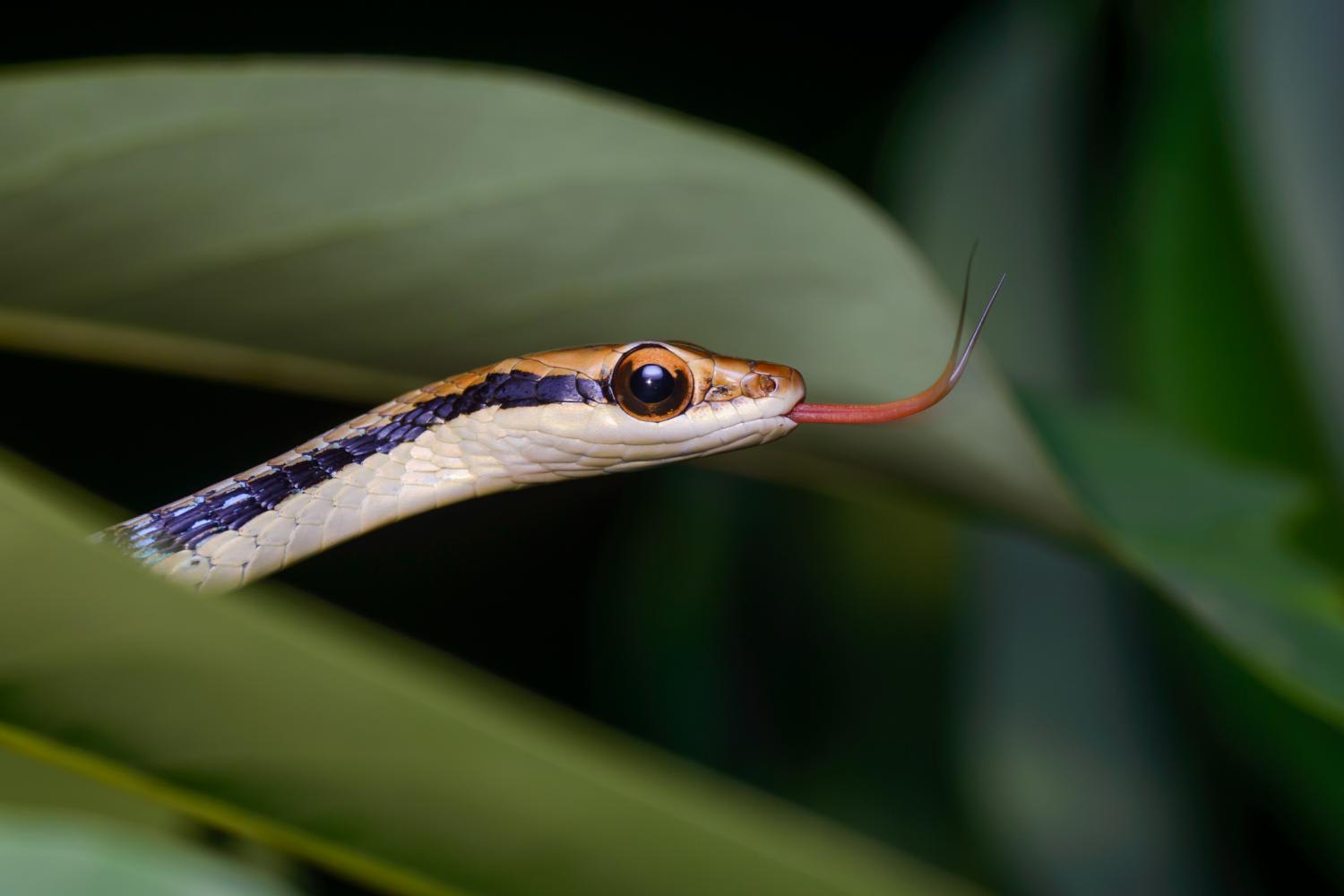
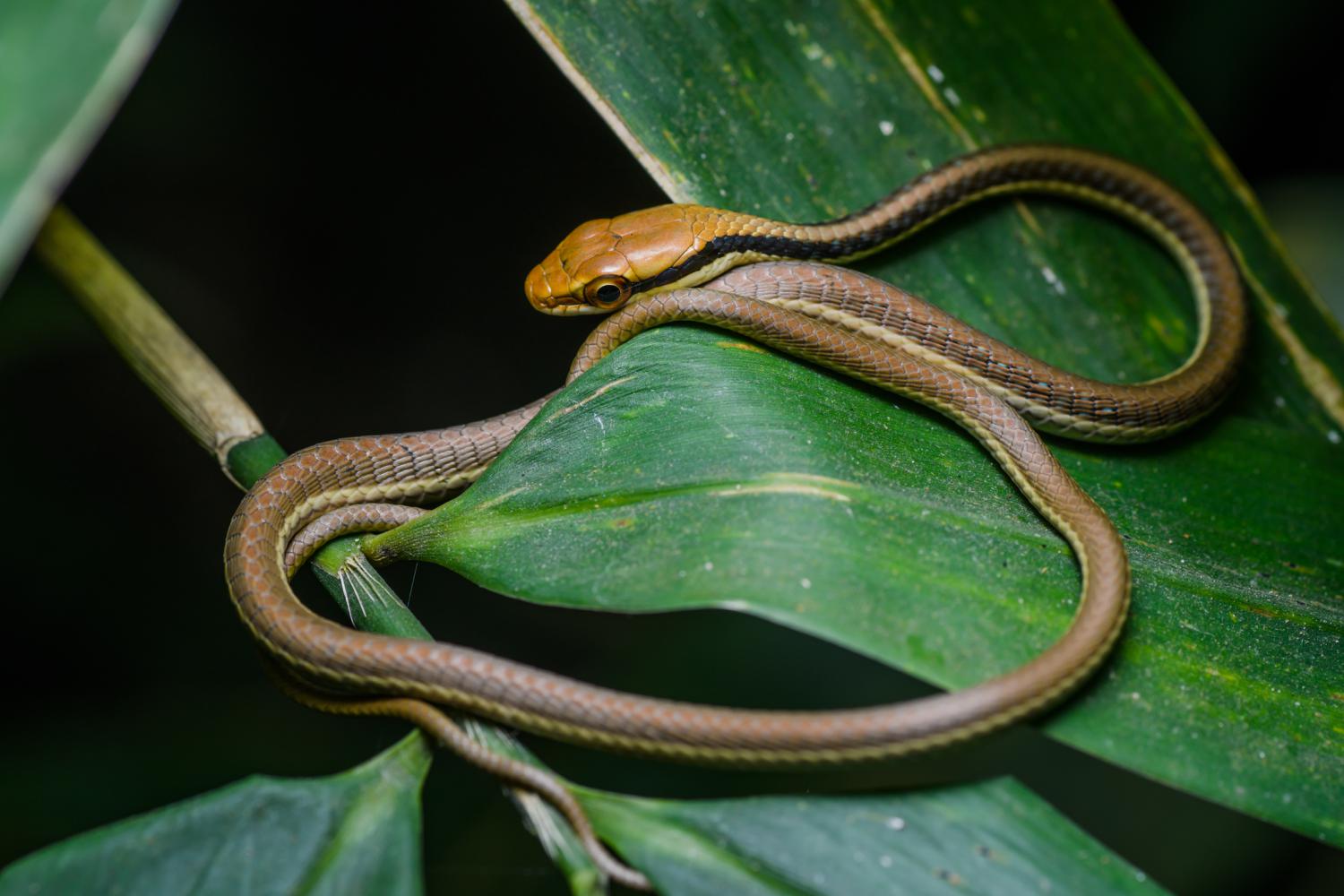
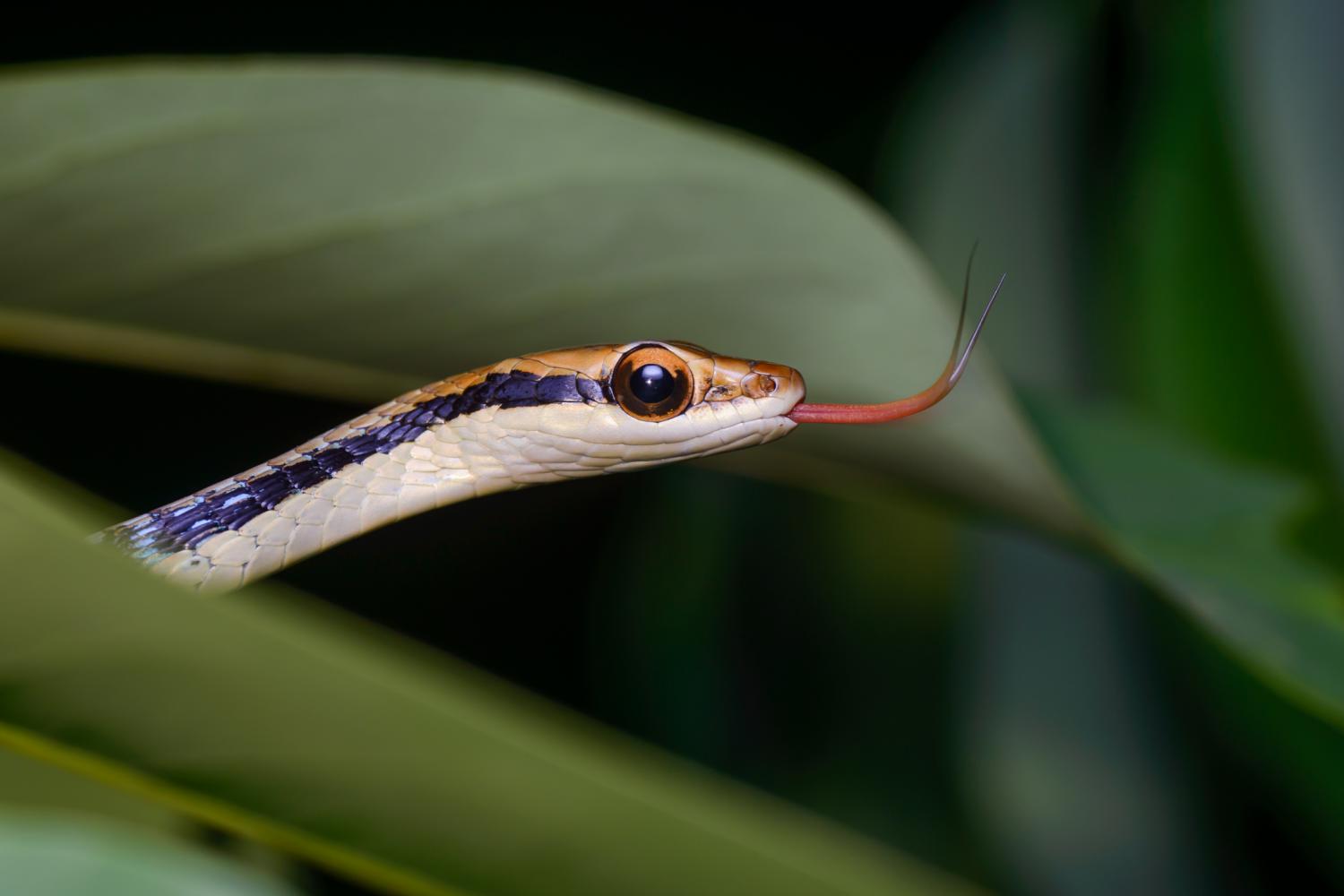
The common bronzeback is an exceptionally slender snake, usually measuring 60–100 cm but occasionally reaching about 1.25 metres. Its back is bronze-brown or olive, with a black stripe running through each eye and a pale cream or yellow stripe along the lower sides. Its relatively large eyes have round pupils—an adaptation suited to this fast-moving daytime hunter.
Defensive Behaviour
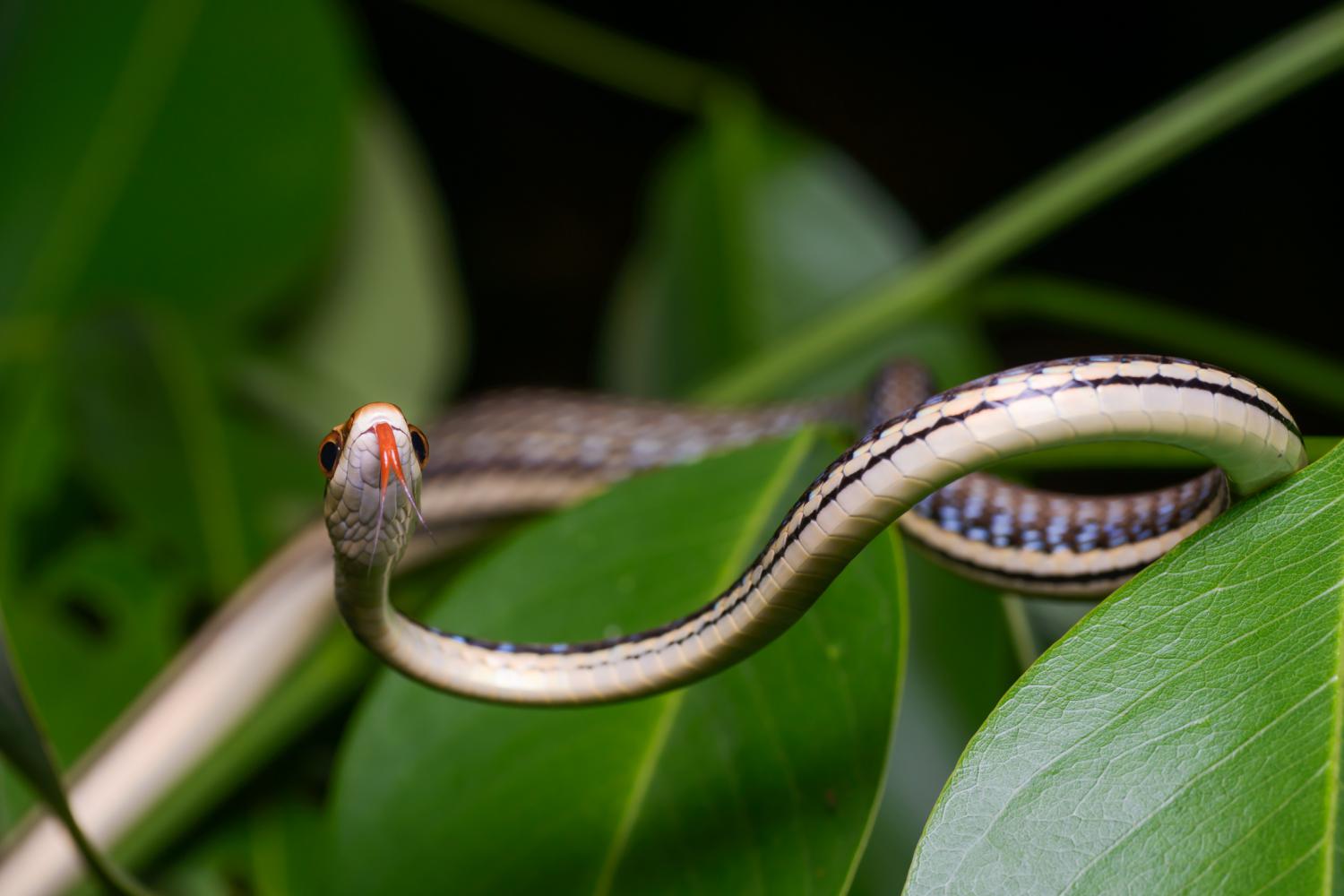
When the common bronzeback feels threatened, it inflates and flattens the front of its body. As its scales spread apart, vivid blue or turquoise skin suddenly appears between them, transforming an otherwise bronze-brown snake into a surprisingly colourful display. The snake does not actually change colour—the blue skin is always present but normally concealed beneath the overlapping scales. This defensive posture makes the snake appear larger and more intimidating, although it will usually escape if given the opportunity.
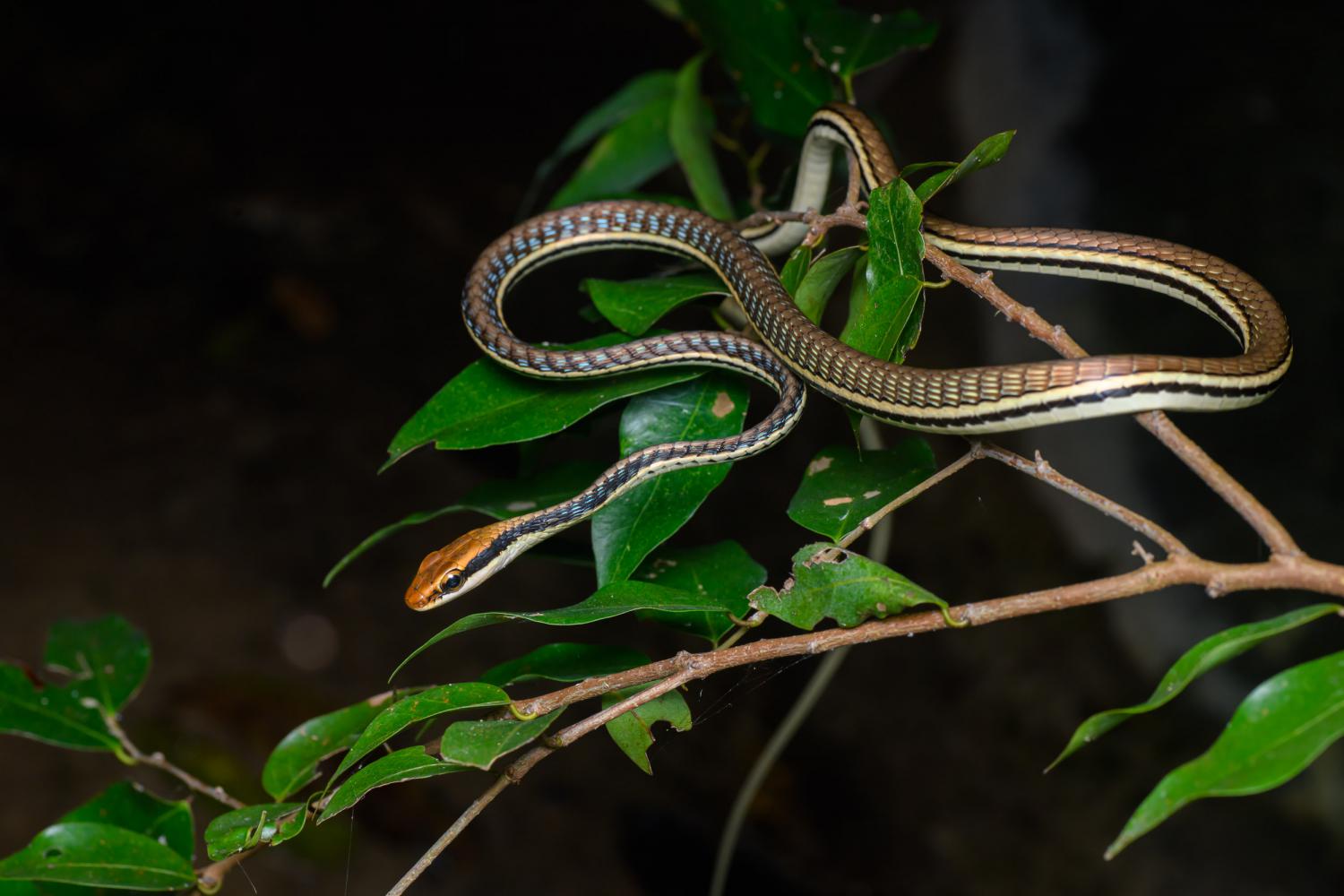
One particularly fascinating aspect of bronzebacks is their movement through the trees. Experiments found that the snakes could use rapid, looped movements to cross larger gaps between branches. Dendrelaphis is the sister lineage of Chrysopelea, the flying snakes, suggesting that this gap-crossing behaviour may represent an evolutionary precursor to the movements later adapted for launching into a glide.
Sources
Ecology Asia Bronzeback Snakes